Women's High-Waisted Distressed Flare Jeans
Women's Jeans
-
+86-13717297921 WhatsApp
-
loveujeans@163.com Email
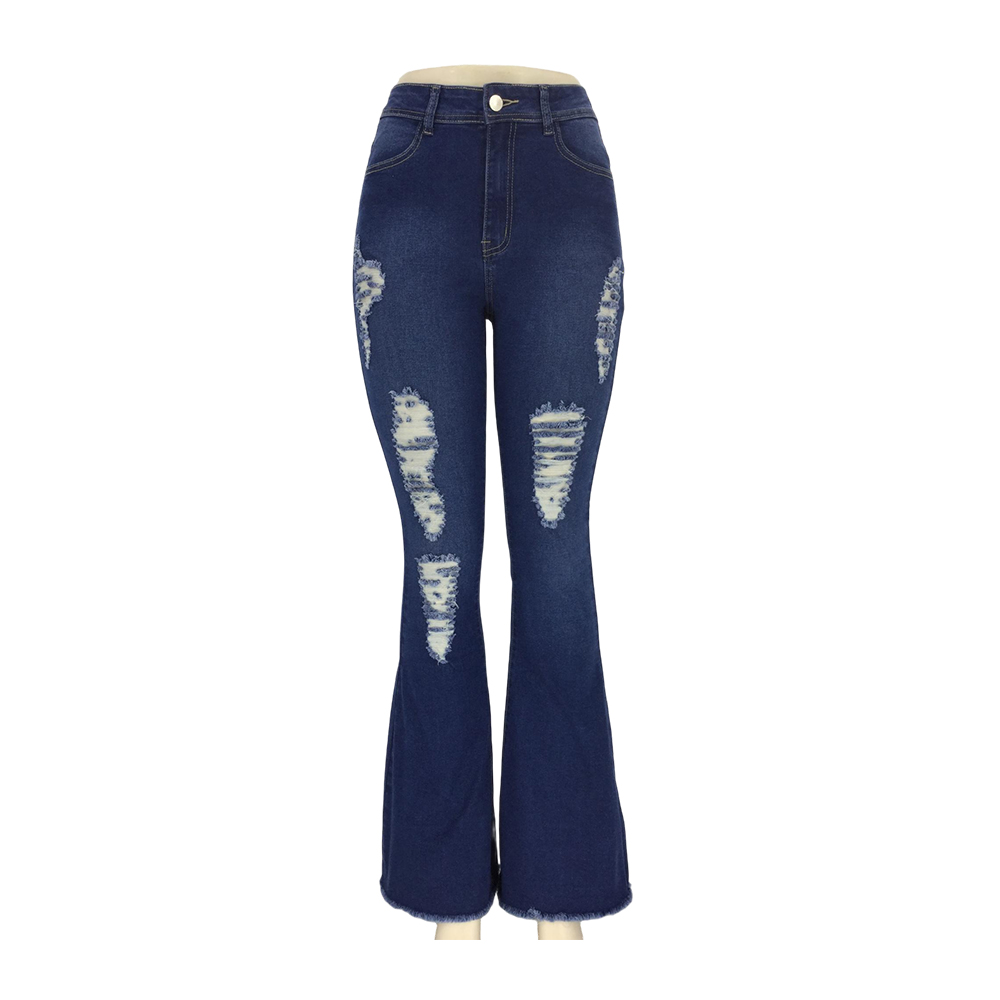
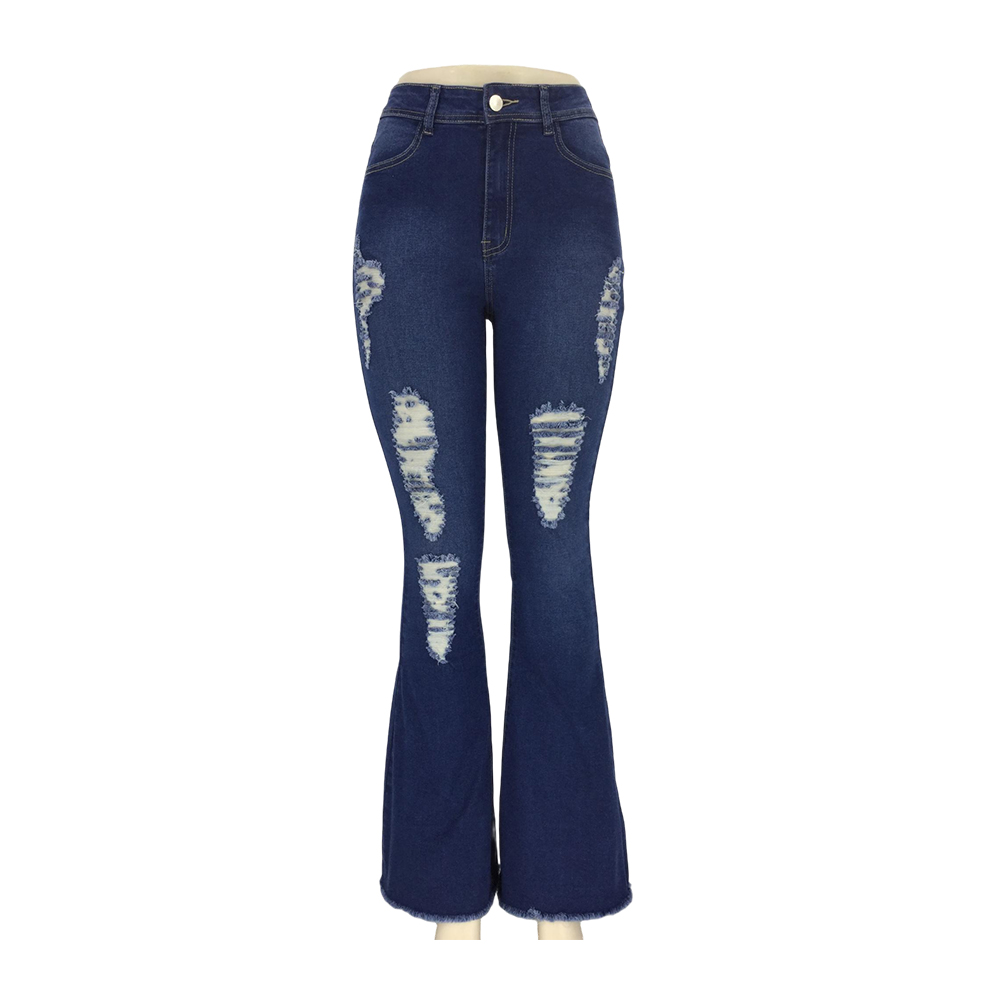
Women's High-Waisted Distressed Flare Jeans are a style of women's denim trousers characterized by a high-rise waist, fitted upper legs, and flared lower legs. The garment is constructed from multiple denim panels, including the front and back body sections, waistband, belt loops, pocket pieces, fly area, inseams, side seams, and leg hems. The front closure consists of a metal button and zipper fly, while the back features two patch pockets with angular lower edges. Distressed sections are incorporated into the front leg panels, creating irregular openings and exposed fabric threads. The leg pattern gradually widens from the knee toward the hem, forming the recognizable flare silhouette. The denim surface has a deep blue color with subtle variations in shade. In apparel product classification, this style falls under women's flared jeans, high-waisted denim trousers, distressed denim pants, and fashion denim bottoms. Product development records can include the fabric composition, fabric weight, stretch percentage, garment measurements, button specifications, distressing placement, and finishing requirements. These details help manufacturers, apparel brands, importers, and wholesale buyers establish consistent product specifications during sampling, costing, and production planning. The product name also identifies the main garment category and silhouette for product catalog organization, technical documentation, and online retail listings.
Women's High-Waisted Distressed Flare Jeans Specifications
| Specification | Details |
| Product Name | Women'S High-Waisted Distressed Flare Jeans |
| Product Category | Women'S Denim Jeans |
| Color | Dark Blue |
| Waist Type | High-Rise Waist |
| Fit | Fitted Upper Leg With Flared Hem |
| Leg Style | Flare |
| Length | Full Length |
| Front Closure | Metal Button And Zipper Fly |
| Front Pockets | Curved Side Pockets |
| Back Pockets | Two Patch Pockets |
| Distressing | Multiple Frayed Openings On Front Legs |
| Belt Loops | Yes |
| Hem Finish | Frayed / Raw-Look Finish |
| Fabric | Denim |
| Fabric Composition | To Be Confirmed |
| Fabric Weight | To Be Confirmed |
| Stretch Content | To Be Confirmed |
| Available Sizes | To Be Confirmed |
| Button Material | To Be Confirmed |
| Wash Finish | Dark Blue Washed Finish |
| Stitching | Contrasting Topstitching |
| Colorfastness | Subject To Testing |
| Shrinkage Rate | Subject To Testing |
| OEM / ODM | Subject To Manufacturer Confirmation |
| Private Label | Subject To Agreement |
Women's High-Waisted Distressed Flare Jeans Features
1. High-Rise Waist
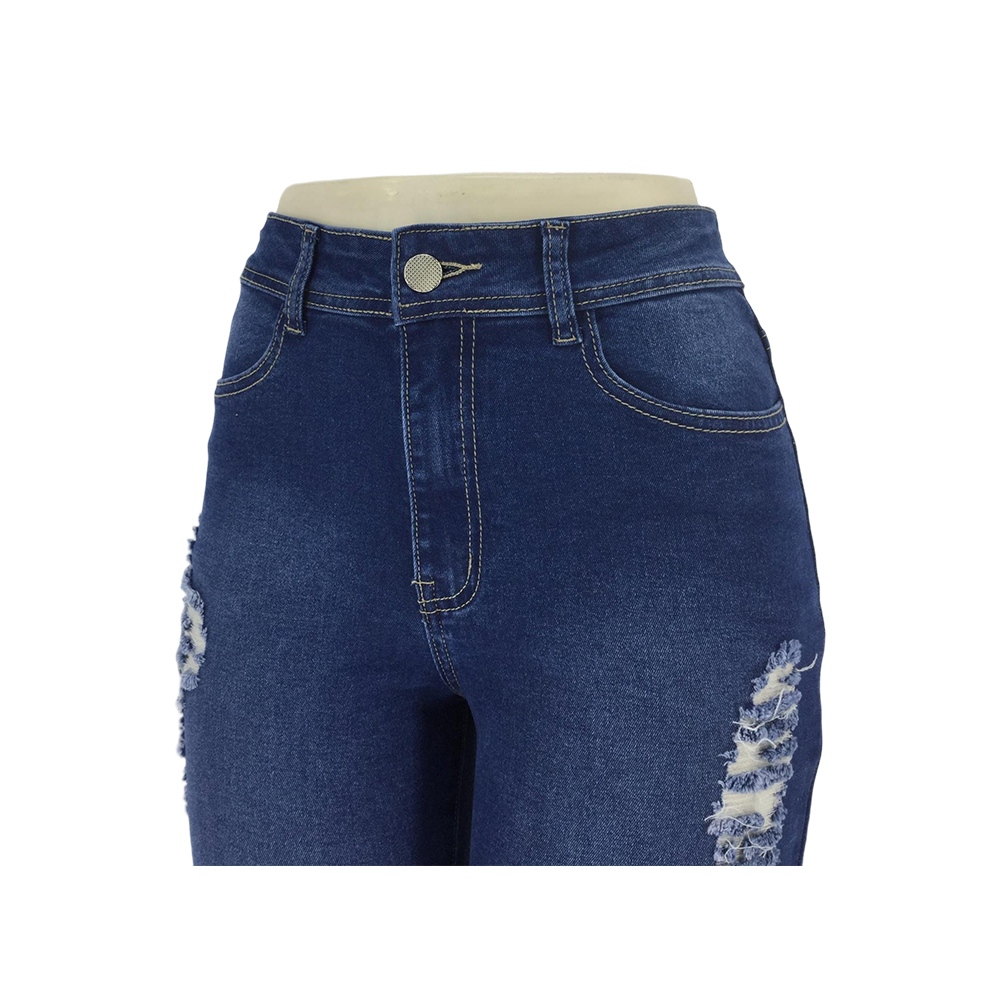
The high-rise waistband creates a defined waistline and connects to the fitted upper section of the jeans. Belt loops and a front button closure complete the waistband construction, while the zipper fly provides a conventional fastening arrangement. For apparel brands developing a private-label denim collection, the waistband height, waist circumference, front rise, and back rise should be recorded in the technical specification sheet. A provisional tolerance of ±1 cm may be agreed upon for selected points of measure, subject to the buyer's quality requirements. During sample approval, the waistband should be checked for alignment, even stitching, and consistent attachment to the body panels. Fit evaluation should include sitting and bending movements to identify unwanted gaping or excessive pressure. Button attachment and zipper operation also require inspection before bulk production. An approved measurement chart and graded pattern help maintain the intended waist proportions across the selected size range.
2. Flared Silhouette
The fitted upper leg gradually widens from around the knee toward the hem, creating the characteristic flare shape. This pattern gives the garment a different outline from straight-leg, tapered, and skinny jeans. For manufacturing, the knee width, thigh circumference, calf width, leg opening, inseam, and outseam should be documented for each size. Buyers can establish a measurement tolerance, such as ±1 cm for selected dimensions, in the approved technical pack. The flare should be assessed from the front, side, and back to check whether both legs have a consistent shape and length. Seam alignment and hem width require attention because small cutting differences may affect the finished silhouette. Denim washing can also change garment dimensions, so post-wash measurements should be reviewed before approving bulk production. A clearly graded pattern helps maintain the intended leg shape throughout a multi-size order and supports repeat manufacturing for wholesale collections.
3. Distinctive Distressing
Multiple distressed openings across the front legs create an irregular, textured surface against the dark-blue denim. The visible areas feature frayed edges and exposed lighter-colored fibers, giving the jeans a deliberately worn appearance. Each opening needs a defined position, length, width, and shape in the approved sample or production reference. For repeat orders, buyers should document the placement of each distressed section in relation to fixed points such as the waistband, side seam, and knee line. A proposed placement tolerance of ±5 mm may be agreed upon for selected details when appropriate to the style. Quality inspection should check for consistent distressing, loose threads beyond the approved design, and unintended fabric damage near major seams. The openings should be compared against the approved sample after washing and finishing. Clear distressing maps help production teams reproduce the intended look while reducing variation between garments in the same wholesale shipment.
4. Classic Pocket Construction
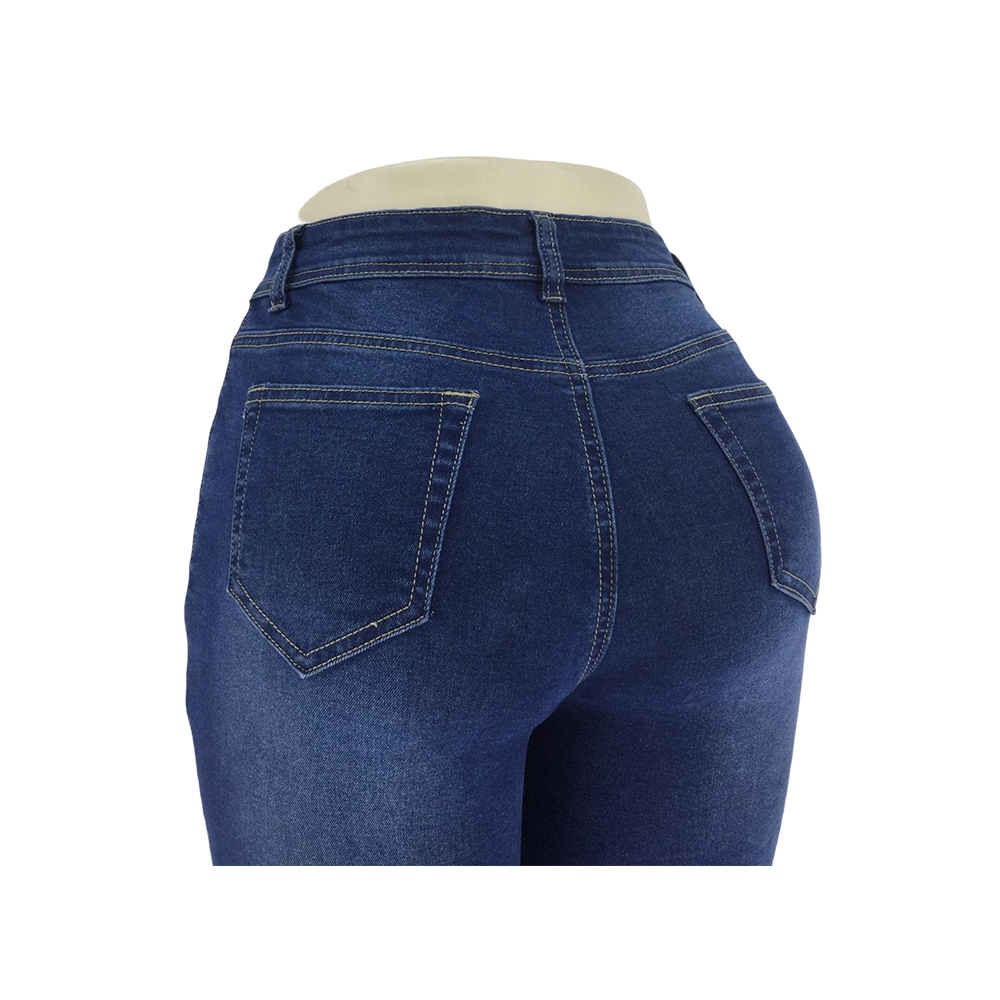
Two front curved pockets and two rear patch pockets provide the garment with a familiar five-pocket-inspired denim layout. The rear pockets have angular lower edges and visible contrast stitching, while the front pocket openings follow curved seam lines. Buyers developing a customized collection can specify pocket width, pocket depth, placement, opening shape, and thread color in the product technical pack. A provisional placement tolerance of ±5 mm may be used for selected pocket details, subject to the approved sample. During inspection, the left and right pockets should be compared for symmetry, stitch consistency, and alignment with the waistband and side seams. Pocket openings should remain functional, with no skipped stitches or loose threads along the edges. Stress points should receive particular attention during sewing checks. Documented pocket measurements and reference photographs can help manufacturers maintain the same visual proportions across different sizes and subsequent production batches.
5. Dark Blue Washed Finish
The deep-blue denim surface features subtle tonal variation, while the distressed sections reveal lighter fibers and contrast with the surrounding fabric. The final appearance depends on the selected denim, dyeing process, washing recipe, and distressing method. Before bulk production, buyers should approve a physical color sample under consistent lighting and establish acceptable shade variation. Colorfastness to washing can be evaluated using ISO 105-C06, while dimensional changes can be assessed using ISO 5077 with an agreed washing and drying procedure. Acceptance grades and shrinkage limits should be specified in the purchase requirements rather than assumed from appearance alone. Post-wash inspection should cover shade consistency, seam appearance, distressing placement, leg length, and hem condition. For OEM and ODM projects, buyers can discuss alternative blue shades, fabric compositions, stretch levels, hardware finishes, labels, and packaging according to the manufacturer's capabilities. A signed-off reference sample and written inspection criteria provide a practical basis for consistent repeat orders.