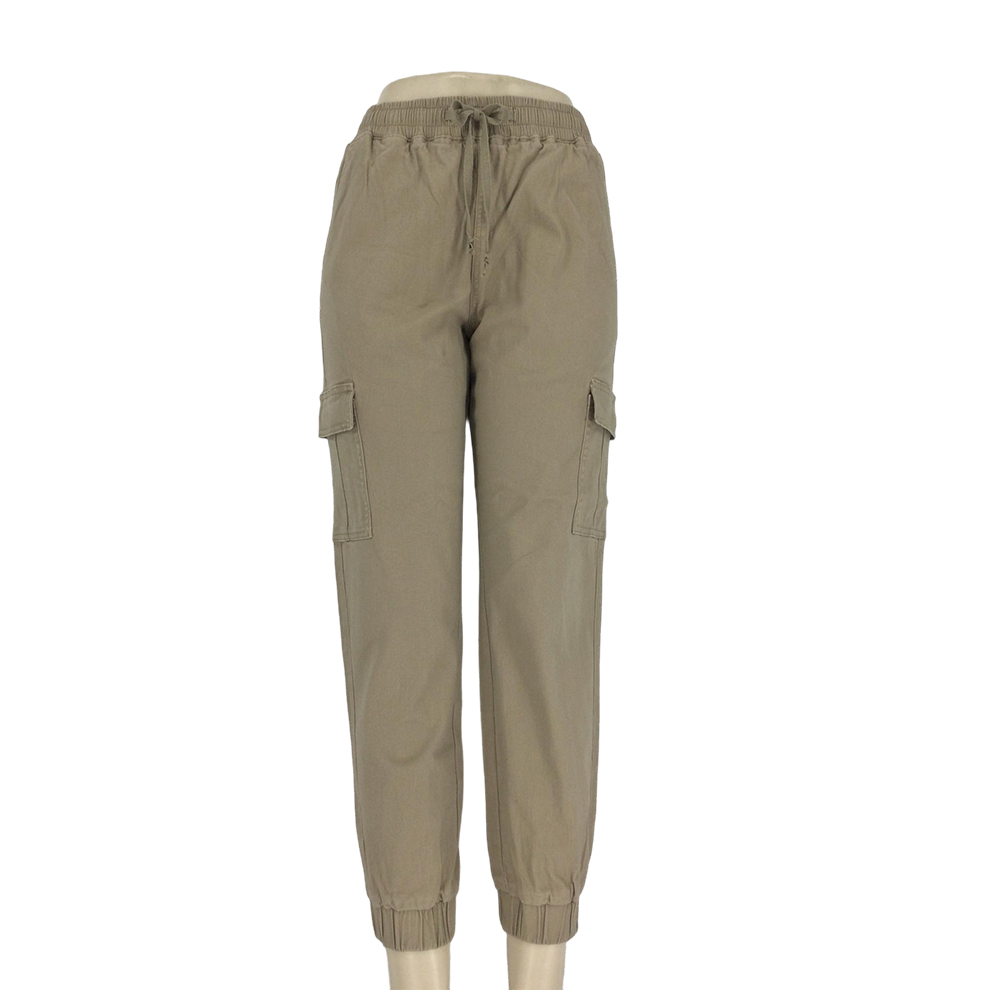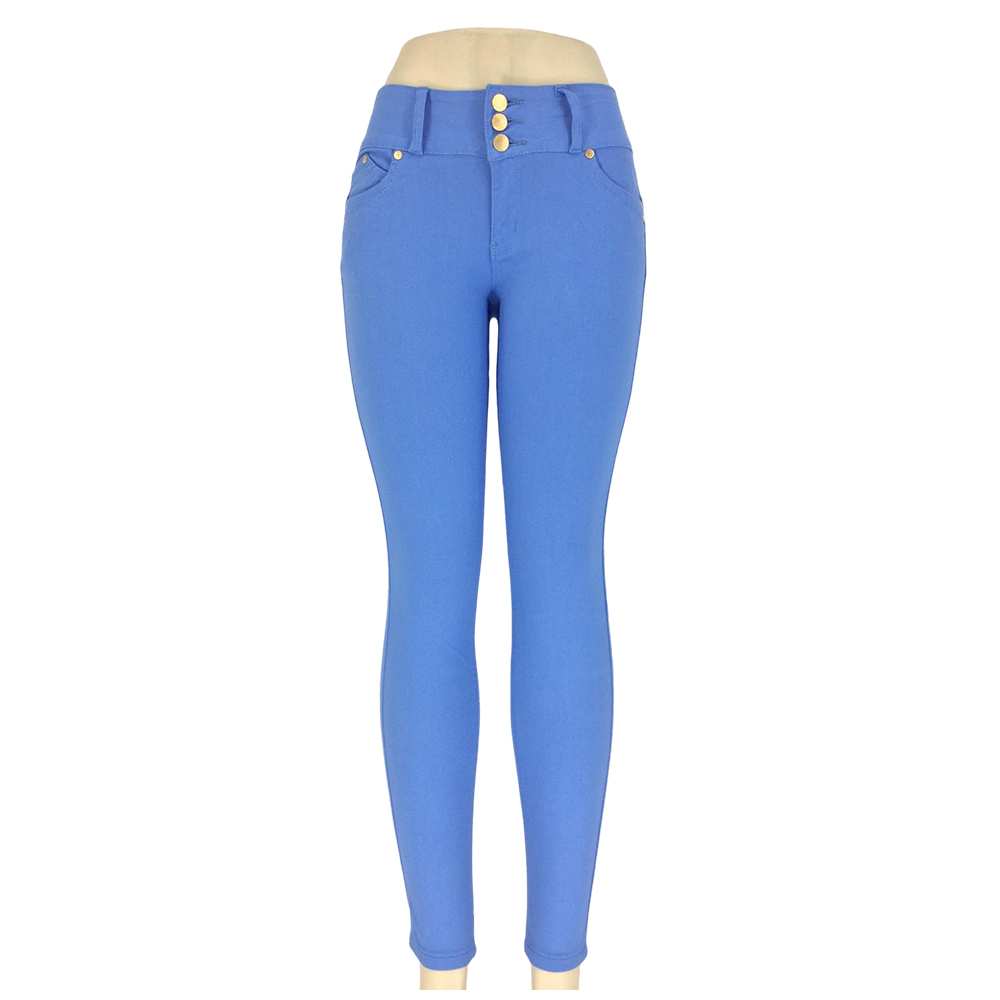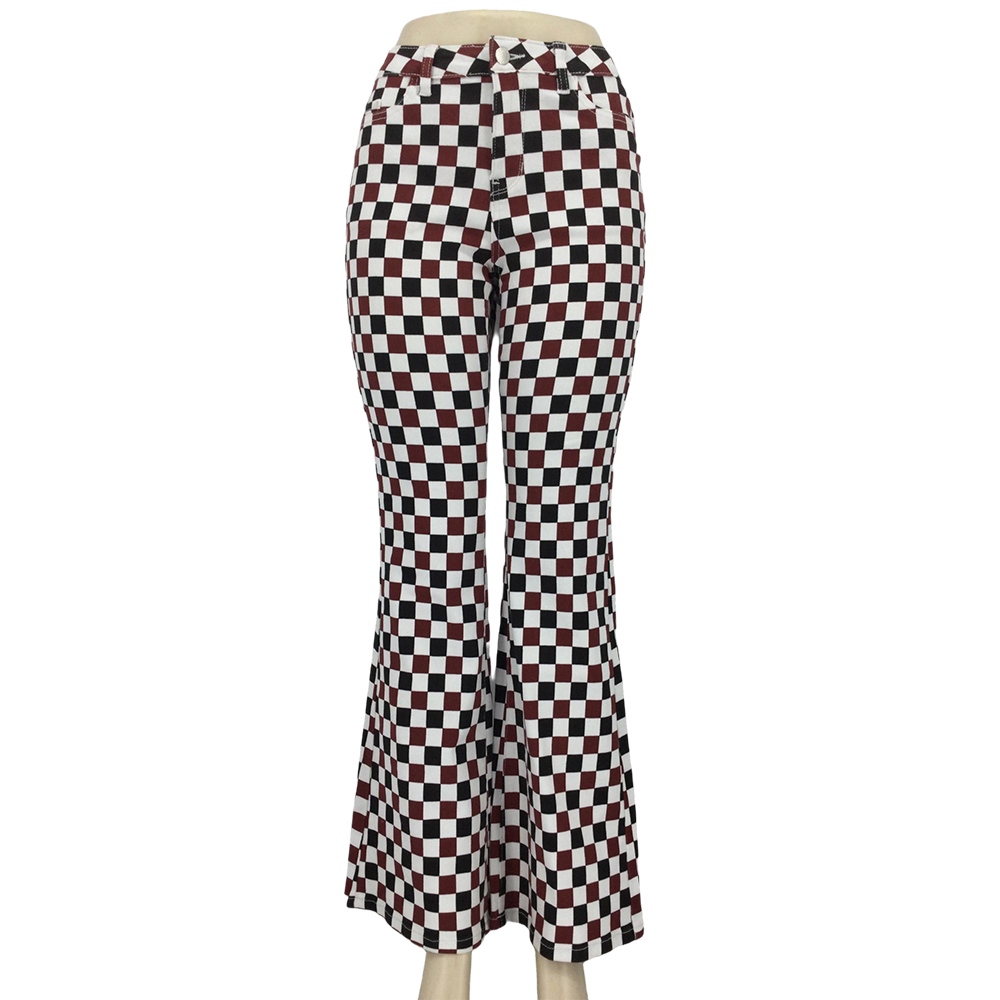
Women's Camouflage Slim-Fit Twill Pants
Women's Jeans
-
+86-13717297921 WhatsApp
-
loveujeans@163.com Email
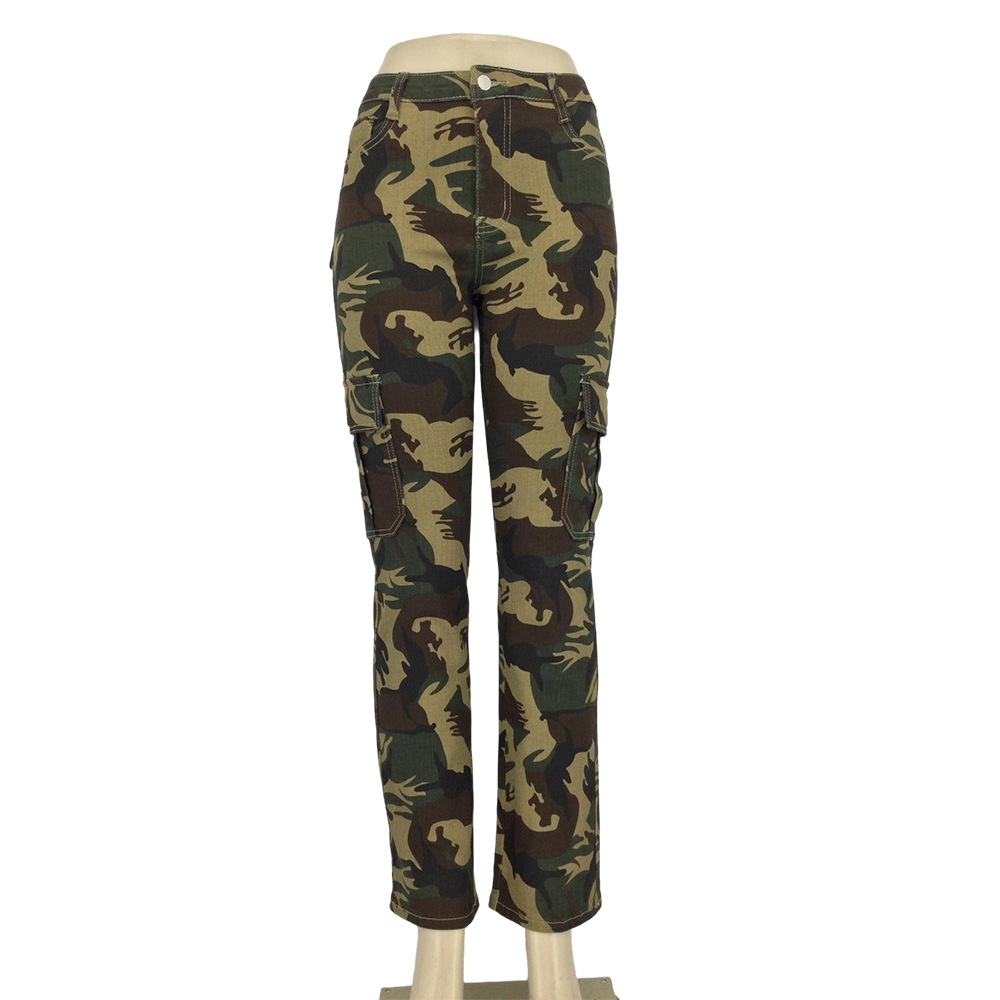
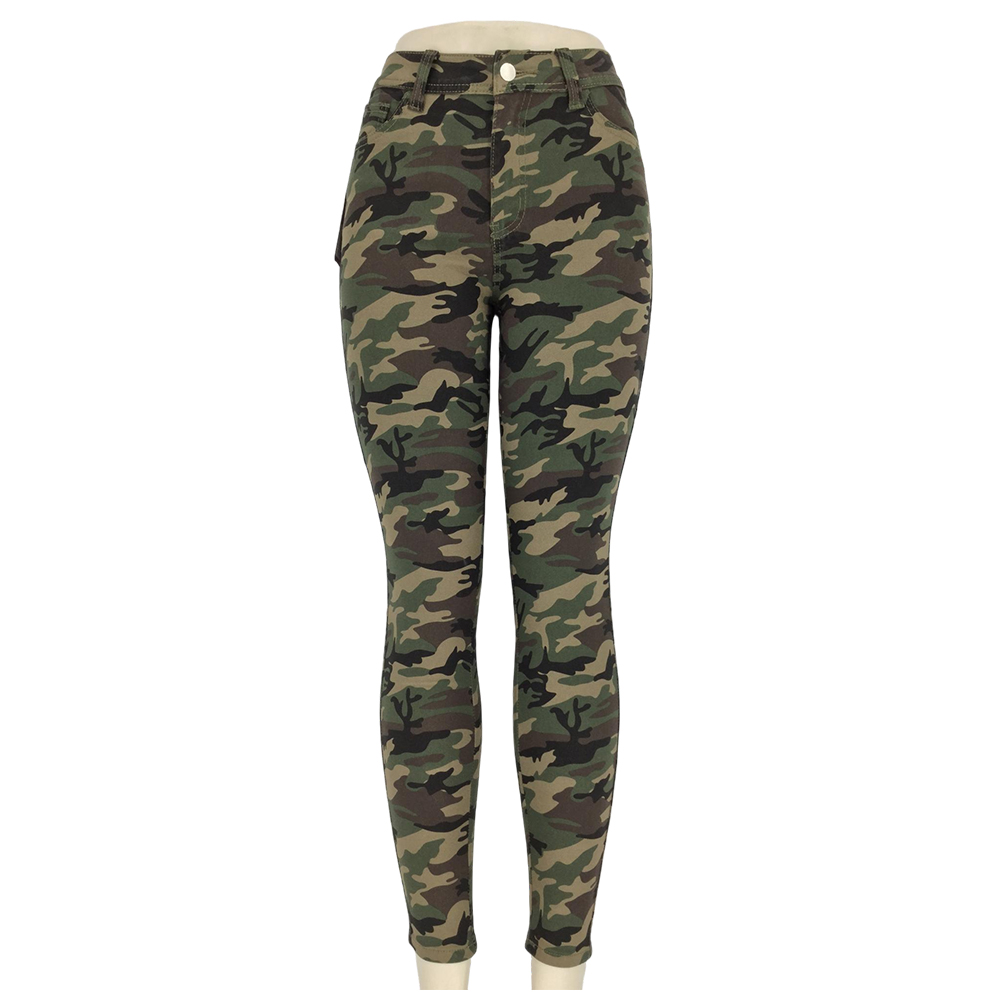
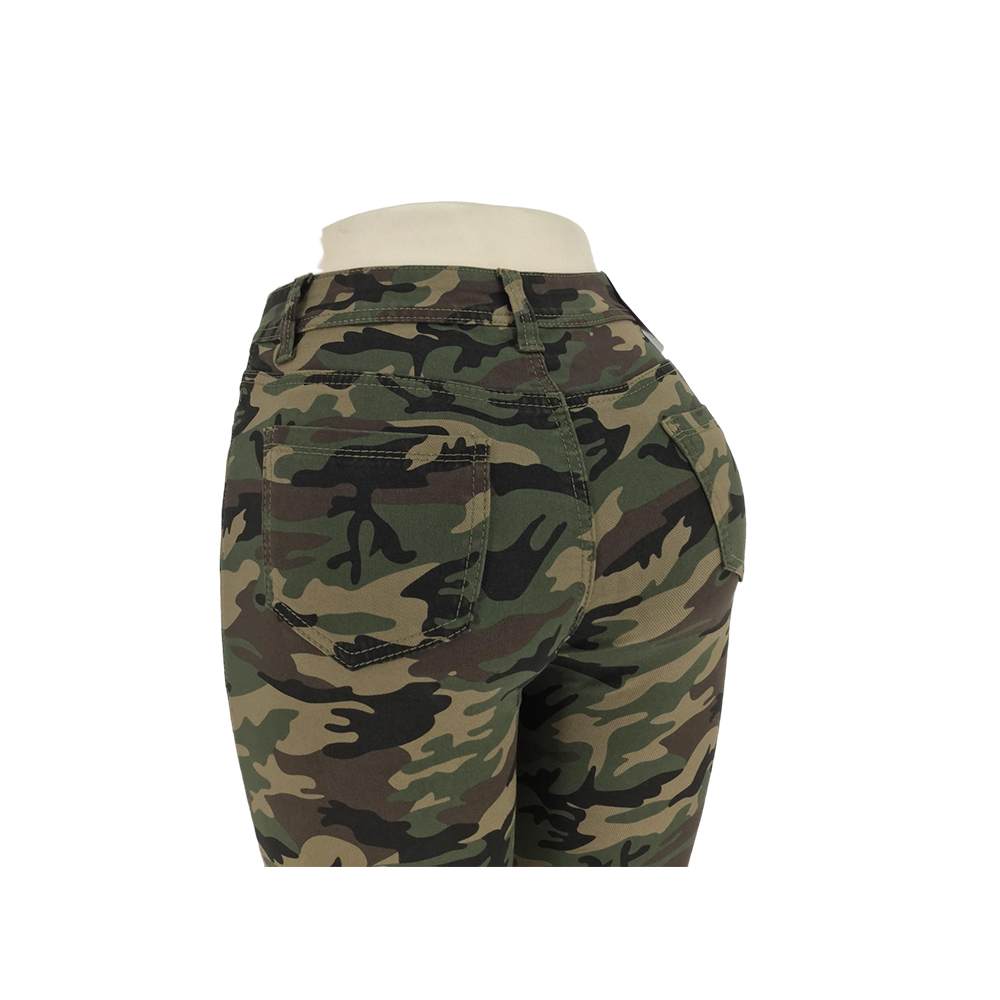
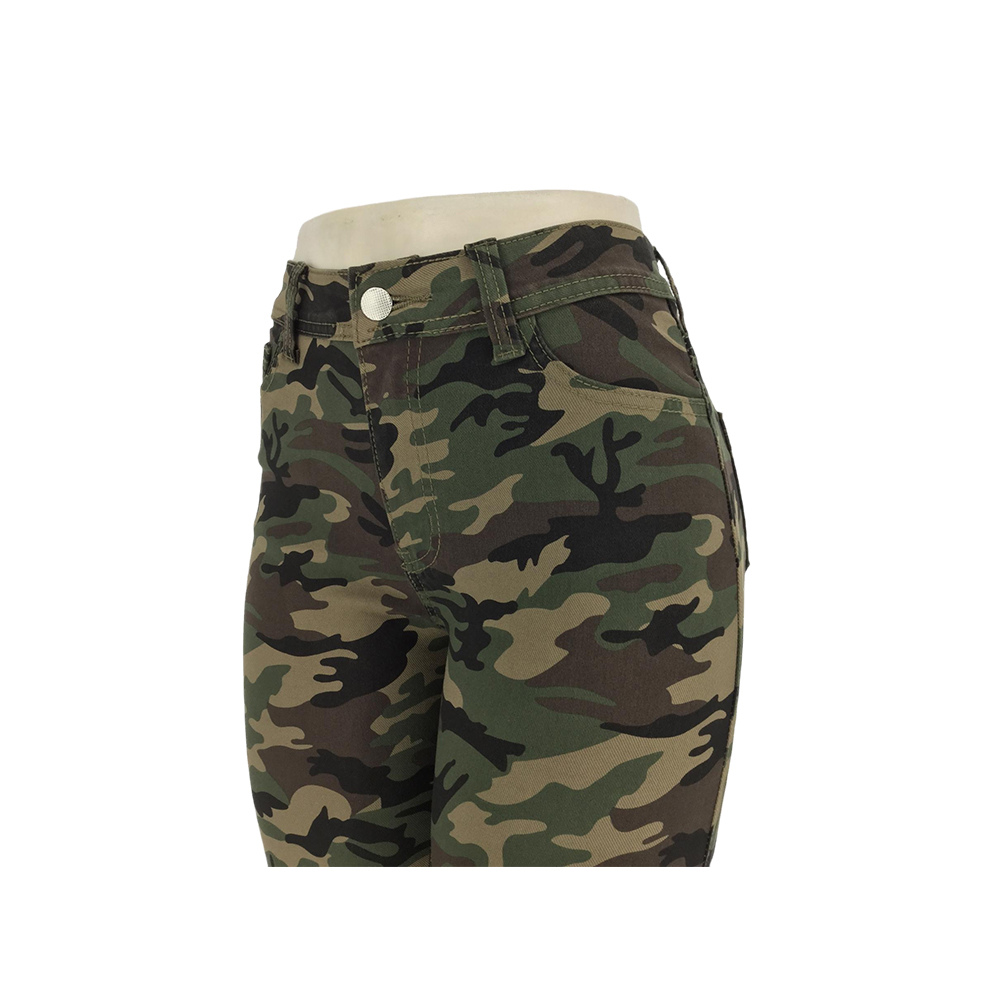
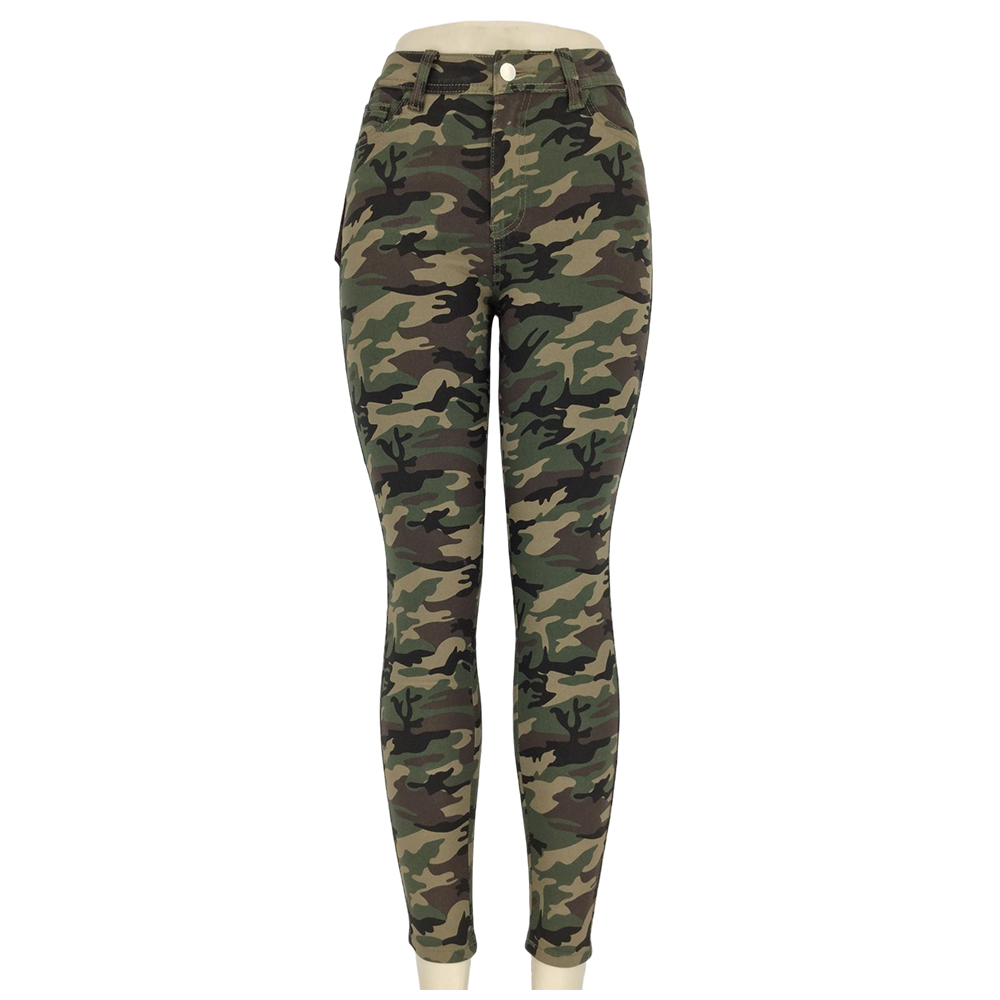
Women's Camouflage Slim-Fit Twill Pants are a women's long-trouser style classified within the casual woven apparel category. The garment is constructed from front and back panels joined along the side seams, inseams, and rise seams. Its upper section includes a waistband, belt loops, a front fly, and a button closure. The front incorporates two slanted pocket openings, while the back features separate patch pockets attached to the rear panels. The trousers extend from the waist to the lower leg, with the hem finishing above the ankle area depending on the selected size and wearer proportions. The product shown in the supplied images features a camouflage pattern combining olive green, brown, black, and muted beige tones. The visible construction includes waistband stitching, pocket outlines, belt loops, and panel seams. For product identification and catalog management, this style can be recorded under women's camouflage trousers or camouflage twill pants. The final technical record should include the confirmed style number, fabric composition, fabric weight, size range, color references, and care instructions.
Women's Camouflage Slim-Fit Twill Pants Specifications
| Specification | Details |
| Product Name | Women'S Camouflage Slim-Fit Twill Pants |
| Product Category | Women'S Trousers |
| Fit | Slim Fit |
| Leg Style | Tapered / Slim Leg |
| Pattern | Camouflage Print |
| Main Colors | Olive Green, Brown, Black, Beige |
| Waistband | Fixed Waistband |
| Waist Details | Belt Loops |
| Front Closure | Button And Front Fly |
| Front Pockets | Slanted Side Pockets |
| Back Pockets | Rear Patch Pockets |
| Fabric Composition | To Be Confirmed |
| Fabric Weight | To Be Confirmed |
| Available Sizes | To Be Confirmed |
| Fabric Stretch | To Be Confirmed |
| Customization | Subject To Manufacturer Confirmation |
Women's Camouflage Slim-Fit Twill Pants Features
1. Slim-Fit Silhouette
The slim-fit cut creates a closer outline through the hips and legs, with the trouser panels following a relatively narrow profile toward the lower hem. For apparel brands developing women's woven trousers, fit specifications should cover waist circumference, hip circumference, front rise, back rise, thigh width, knee width, leg opening, and inseam length. These measurements can be documented in a graded size chart for each size offered. A tolerance of approximately ±1 cm may be considered for selected measurements, subject to the approved sample, fabric properties, and buyer requirements. During sample development, the manufacturer can assess the relationship between hip ease, thigh width, and leg taper. Confirming these proportions before bulk production helps maintain consistent sizing across the product range and reduces avoidable fit discrepancies.
2. Distinctive Camouflage Print
The camouflage pattern combines olive green, brown, black, and beige tones across the front and back panels. Its irregular shapes create a recognizable visual arrangement across the garment, including the waistband and pocket areas. For private-label and wholesale projects, buyers can provide approved artwork, physical color references, or a sample garment to establish the expected print appearance. Before cutting, the production team should review pattern direction, repeat dimensions, color distribution, and alignment around the major seams. Where the print layout affects pocket placement, the approved sample can serve as a reference for checking visual consistency. Color assessment should take place under consistent lighting conditions. Alternative camouflage colorways may be discussed according to the buyer's specifications and the manufacturer's available materials and printing capabilities.
3. Defined Waist Construction
The waistband incorporates belt loops and a front closure consisting of a button and fly. This construction creates a conventional trouser waist with clearly defined fastening and belt attachment points. For manufacturing development, relevant specifications include waistband height, waist circumference, button position, fly length, belt-loop width, and belt-loop spacing. The manufacturer can document these dimensions in the product technical sheet and compare them with the approved sample. Selected measurement tolerances, such as approximately ±0.5–1 cm, may be established for appropriate construction details after reviewing the pattern and sewing process. Quality checks can cover button attachment, fly alignment, waistband stitching, and the positioning of each belt loop. Confirming these details before production helps keep the waist finish consistent across sizes and order quantities.
4. Functional Pocket Design
The trousers feature slanted front pockets and separate rear patch pockets. The front openings follow an angled line from the upper hip area, while the rear pockets are attached directly to the back panels with visible perimeter stitching. For bulk orders, buyers can specify pocket width, depth, opening angle, placement, and stitching details in the technical package. The approved sample should be used to verify left-to-right symmetry and the relationship between pocket placement and the garment's overall proportions. A positional tolerance of approximately 0.5 cm may be considered for selected pocket measurements when agreed upon by both parties. Inspection can focus on uneven openings, misplaced pockets, loose threads, and irregular stitching. Final pocket measurements and construction requirements should follow the buyer's approved specifications.
5. Flexible Product Development
Women's Camouflage Slim-Fit Twill Pants can serve as a reference style for OEM or ODM apparel development. Depending on the manufacturer's capabilities, potential adjustments may include the leg profile, waist measurements, pocket dimensions, button finish, camouflage artwork, and available color combinations. Buyers should provide a technical package containing the size chart, fabric composition, fabric weight, trim details, sewing requirements, and packaging specifications. The manufacturer can review these requirements during sample development and confirm which changes are feasible before proceeding with production. Fabric stretch, shrinkage, and finished garment measurements should be evaluated when relevant to the selected material. Once the sample is approved, the signed-off specifications should guide bulk production and inspection. Minimum order quantities, sample lead times, and available customization options require confirmation before an order is finalized.