
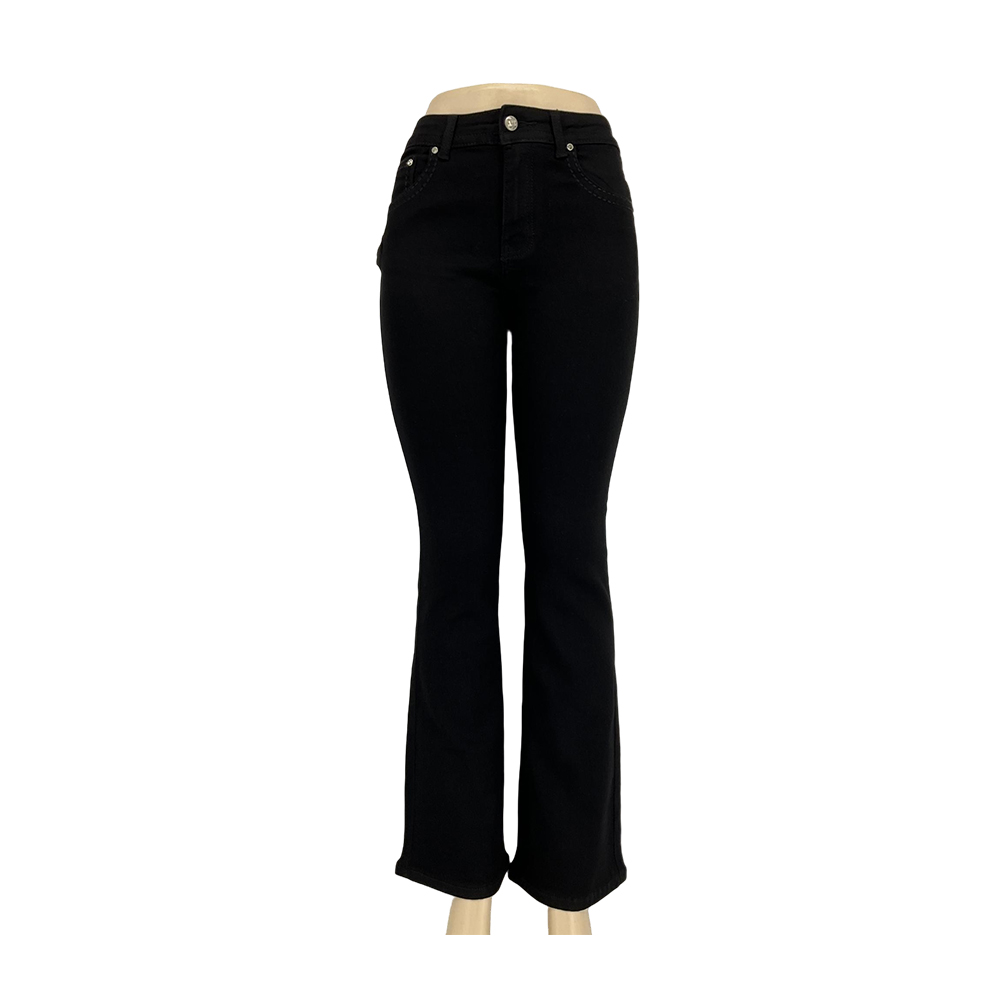
Women's Black Embroidered Bootcut Jeans with Ornamental Cross Pockets
Women's Jeans
-
+86-13717297921 WhatsApp
-
loveujeans@163.com Email
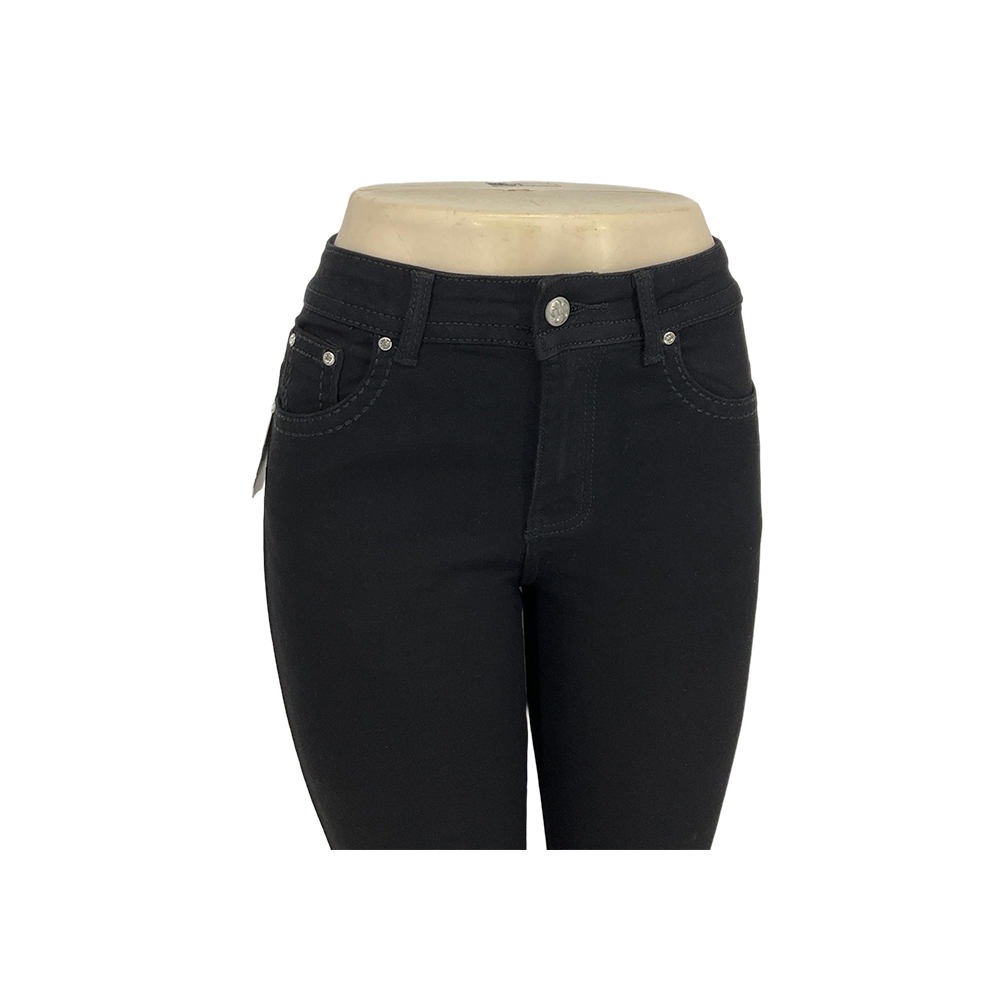
Women's Black Embroidered Bootcut Jeans belong to the women's denim trousers category, featuring a full-length construction with a shaped leg profile and a traditional jeans pattern. The garment consists of front and back panels, a waistband, belt loops, a front fly, curved front pockets, a small coin pocket, two rear patch pockets, inseams, side seams, and finished leg openings. Its product classification is based on the black denim color, bootcut silhouette, embroidered pocket design, and conventional five-pocket arrangement.
The bootcut designation describes a trouser pattern in which the leg gradually widens toward the bottom after following the shape of the upper leg. This silhouette is different from straight-leg, skinny, tapered, and wide-leg constructions. The waistband forms the upper circumference of the garment, while the front fly provides access to the waist opening. Belt loops are positioned around the waistband, and the front and rear pockets are assembled onto their corresponding body panels during garment construction.
From a manufacturing perspective, this product can be specified through its fabric composition, denim weight, waist measurement, hip measurement, front rise, back rise, inseam, knee width, and bottom opening. Other technical details may include thread specifications, seam allowances, stitch density, button dimensions, embroidery placement, and garment-washing instructions. These details establish a consistent reference for pattern making, sample development, size grading, and production inspection.
For wholesale and private label manufacturing, the product specification can also include color standards, decorative artwork files, brand labels, packaging requirements, and approved measurement tolerances. Final technical values should be confirmed against a physical sample and the manufacturer's measurement chart before bulk production.
Women's Black Embroidered Bootcut Jeans with Ornamental Cross Pockets Specifications
| Parameter | Specification |
| Product Name | Women's Black Embroidered Bootcut Jeans |
| Product Category | Women's Denim Trousers |
| Gender | Women |
| Main Color | Black |
| Leg Style | Bootcut / Slight Flare |
| Length | Full Length |
| Waistband | Fixed Waistband with Belt Loops |
| Front Closure | Metal Button and Fly |
| Front Pockets | Two Curved Pockets and One Coin Pocket |
| Back Pockets | Two Patch Pockets |
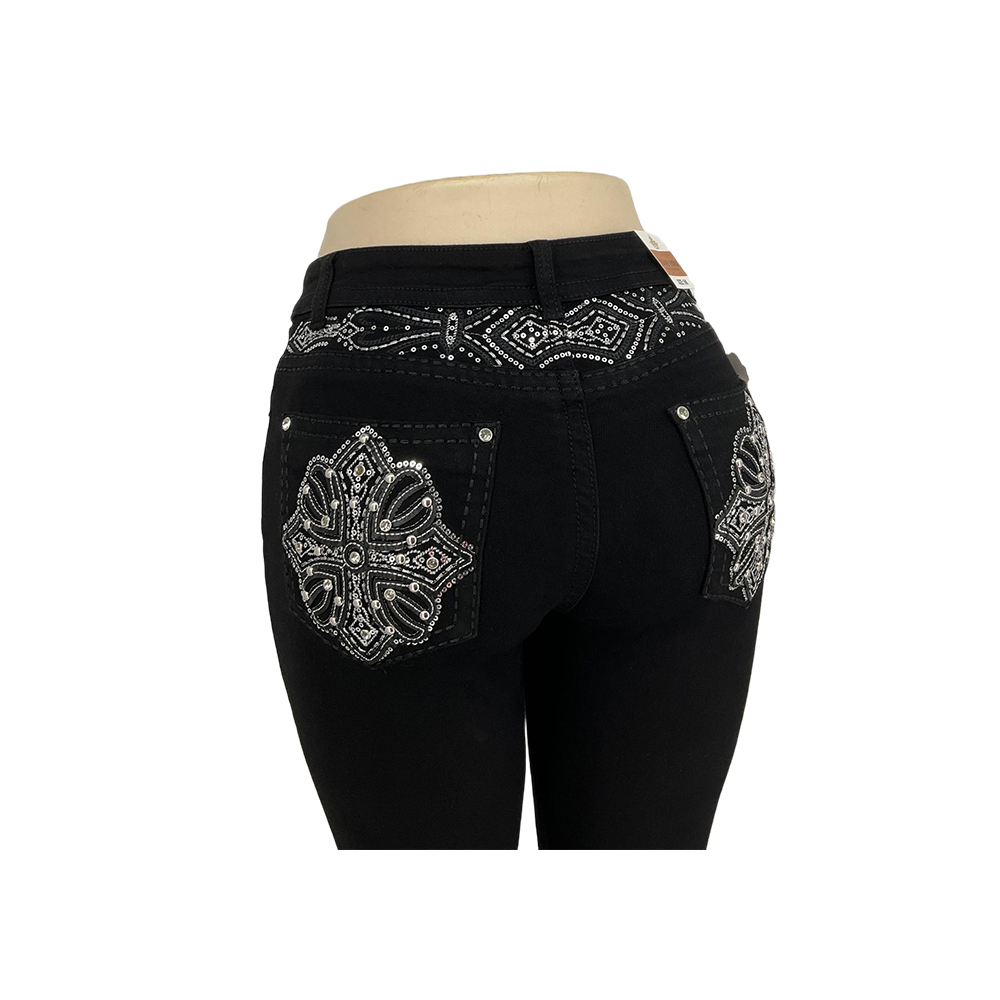
| Pocket Decoration | Ornamental Cross Embroidery |
| Waistband Decoration | Geometric Embroidery |
| Embellishments | Silver-Tone Decorative Details |
| Stitching | Black Contrast Stitching |
| Fabric Appearance | Solid Black Denim |
| Fit | Shaped Upper Leg with Flared Hem |
| Customization | Fabric, Fit, Embroidery, Hardware, Labels |
| Manufacturing Service | OEM / ODM Subject to Requirements |
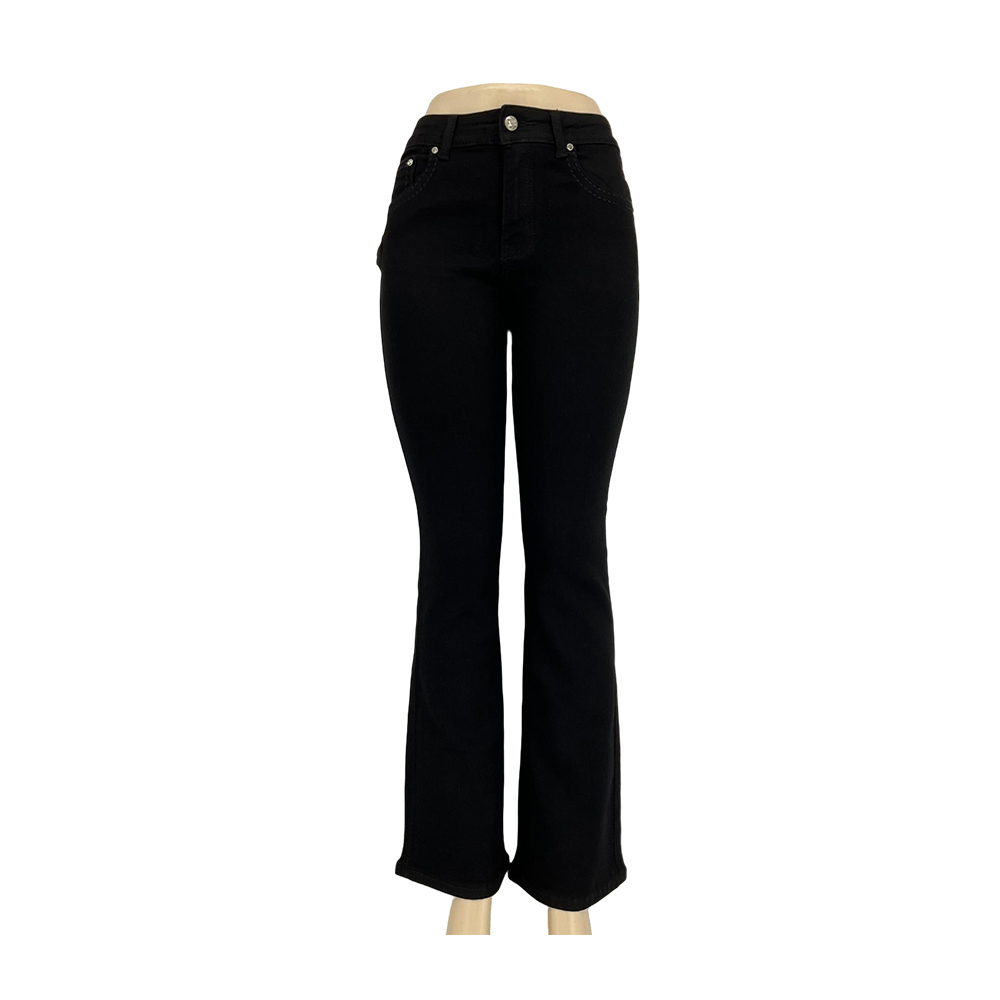
Women's Black Embroidered Bootcut Jeans with Ornamental Cross Pockets Features
1. Refined Black Finish
The black denim surface creates a clean visual foundation for the ornamental pocket decoration, allowing the lighter embroidery and silver-tone accents to stand out clearly. Compared with heavily faded denim, a predominantly black finish creates a more uniform color appearance across the front panels and legs. During production, the approved sample should establish the required shade, surface appearance, and acceptable color variation. Colorfastness testing can reference ISO 105-C06 for domestic and commercial laundering conditions and ISO 105-X12 for rubbing, with the appropriate test method selected according to the buyer's requirements. Manufacturers should evaluate the fabric before and after washing to check for unwanted fading, staining, or shade differences. Buyers can also specify the preferred black tone, surface treatment, and washing method. Final fabric weight and fiber composition should be documented separately to support consistent bulk production.
2. Ornamental Pocket Embroidery
The rear pockets feature symmetrical cross-inspired motifs with curved lines, geometric outlines, small decorative dots, and silver-tone accents. Embroidery is concentrated around the pocket panels, creating a distinctive focal point against the plain black denim body. The decorative artwork can be developed through computerized embroidery, with stitch direction, density, thread color, and motif dimensions established during sample approval. For initial sampling, selected embroidery placement points may use a provisional tolerance of ±3–5 mm, subject to the approved technical specification. Quality inspection should check for skipped stitches, loose threads, uneven outlines, fabric puckering, and differences between the left and right pockets. Decorative components also require attachment checks before packing. For private label orders, the embroidery pattern, thread palette, motif scale, and embellishment layout can be adjusted to match the buyer's collection identity.
3. Balanced Bootcut Shape
The jeans feature a shaped upper leg and a gradual increase in width toward the bottom hem. This creates a recognizable bootcut profile without the broad volume associated with wide-leg trousers. Pattern development should define the waist, hip, front rise, back rise, thigh, knee, inseam, and leg-opening measurements. The knee-to-hem relationship determines the degree of flare, while the rise and hip measurements influence the overall fit. A provisional measurement tolerance of ±1 cm may be considered for selected garment points, subject to the approved size chart and applicable product requirements. During grading, each size should retain the intended leg proportions and pocket positioning. Manufacturers can revise the rise, thigh ease, knee width, and hem circumference to suit different customer groups. Final measurements should be established through sample fitting and confirmed before production release.
4. Functional Five-Pocket Design
The front construction includes two curved pockets and a small coin pocket, while two rear patch pockets provide the foundation for the decorative embroidery. This arrangement follows a familiar jeans construction pattern, allowing the garment to retain a recognizable denim appearance despite its elaborate back-pocket artwork. Production specifications should define pocket depth, opening width, placement, reinforcement, and seam construction. A preliminary placement tolerance of ±5 mm may be considered for selected pocket details, subject to the approved sample. Inspection should focus on symmetrical pocket positioning, clean pocket corners, even topstitching, and secure attachment at stress points. The front fly and waistband should also be checked for alignment and consistent assembly. Wholesale buyers can request different pocket shapes, pocket sizes, or reinforcement details according to their product specifications and target retail positioning.
5. Coordinated Hardware and Stitching
The metal-tone waist button and pocket accents introduce contrast against the black fabric, while the restrained dark stitching maintains a coordinated appearance across the front panels. Belt loops, the waistband, fly, pocket edges, and leg seams should follow the approved construction sample to keep the garment visually consistent. During development, the manufacturer should document thread type, stitch density, seam allowance, button dimensions, and hardware finish. A reference range of approximately 8–10 stitches per inch may be evaluated for selected visible seams, depending on the denim weight, thread thickness, and required appearance; this is a preliminary production reference rather than a confirmed specification for the pictured garment. Quality checks should cover loose threads, skipped stitches, uneven seam lines, button attachment, and hardware surface defects. OEM buyers can specify alternative hardware finishes, thread colors, and branded buttons for coordinated product collections.