
Women's Acid Wash Distressed Skinny Jeans
Women's Jeans
-
+86-13717297921 WhatsApp
-
loveujeans@163.com Email
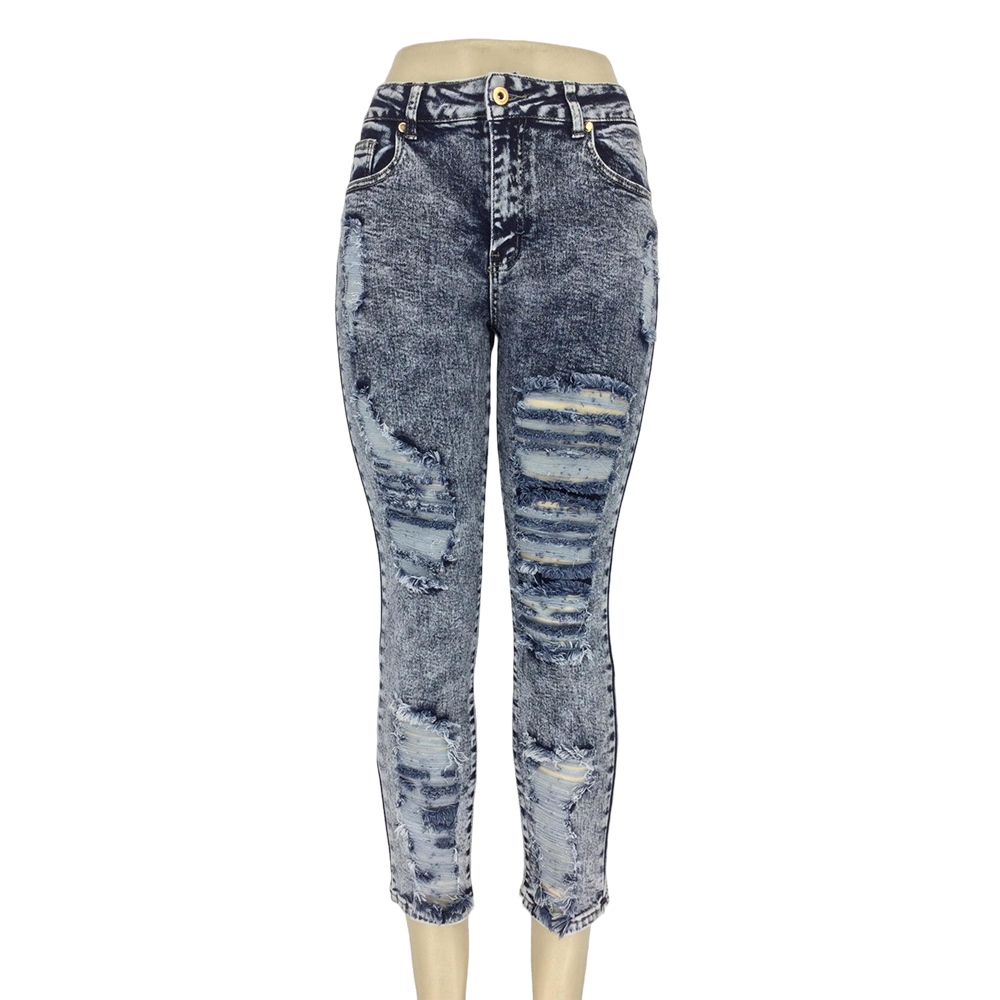
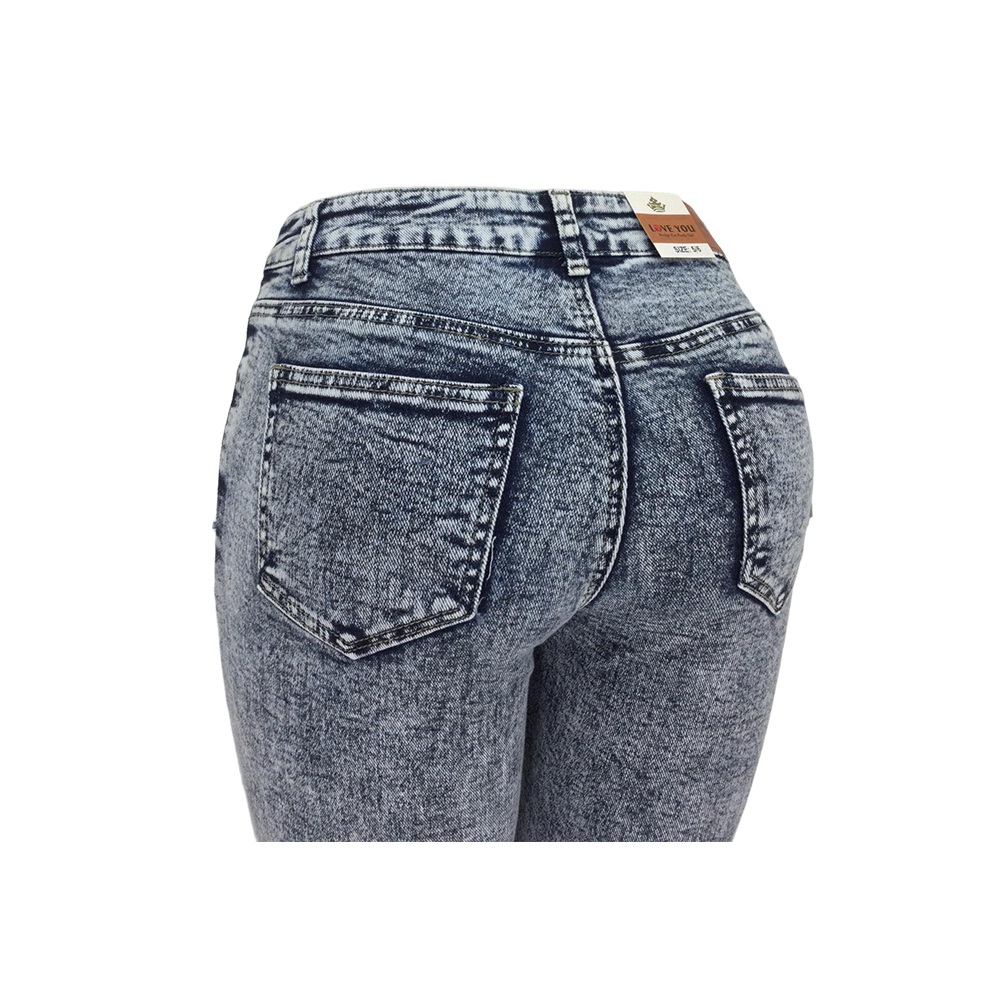
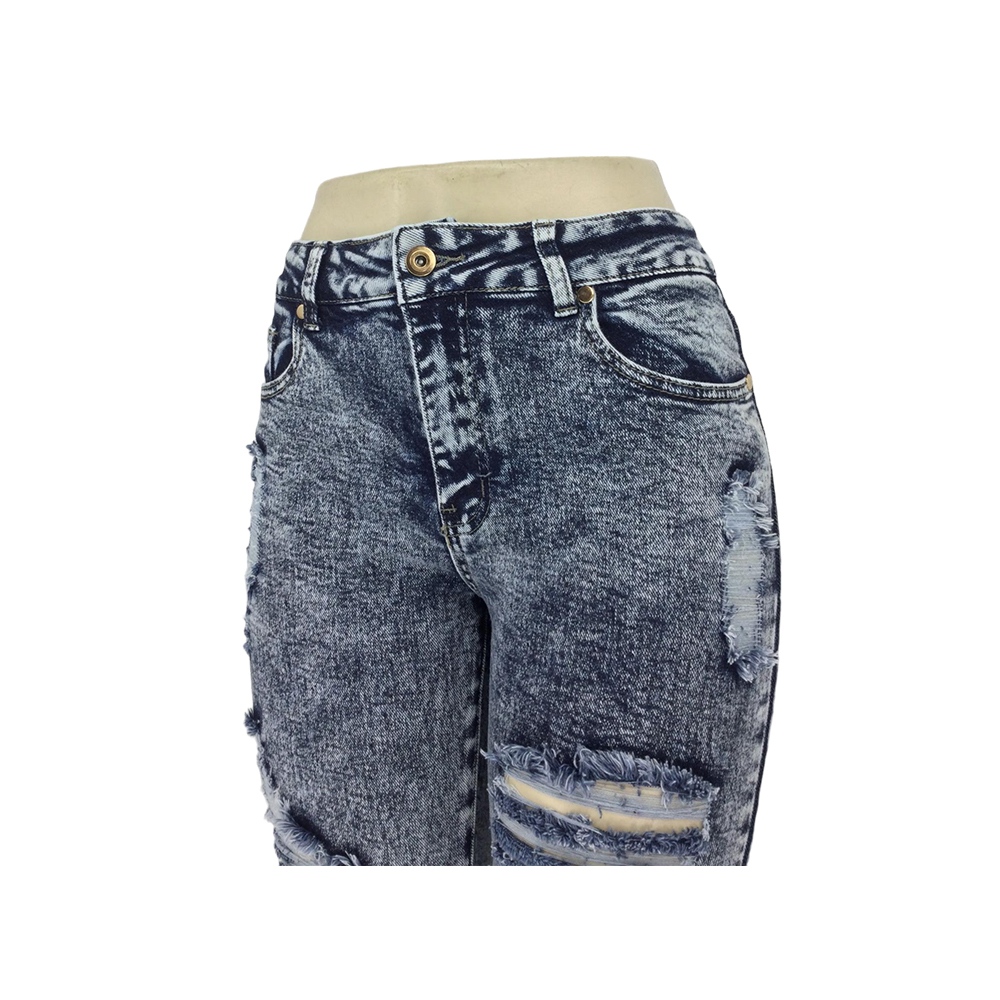
Women's Acid Wash Distressed Skinny Jeans are a type of denim trousers categorized within contemporary women's jeans. The garment follows the traditional five-pocket jeans pattern, consisting of a waistband, belt loops, front fly, front pockets, coin pocket, back pockets, yoke, inseams, side seams, and finished leg openings. Its construction combines multiple denim panels joined through stitched seams to form the overall trouser shape. The front fly is secured with a metal button, while the pocket arrangement follows the established construction principles used in classic denim garments. The back section includes two patch pockets positioned below the waistband and above the seat area. The garment is presented in a blue-gray color family with a contrasting washed surface. Its overall product classification includes women's denim pants, skinny jeans, acid-wash jeans, distressed jeans, and washed denim trousers. The product can be documented through a technical specification covering fabric composition, fabric weight, garment measurements, size grading, seam construction, fastening materials, wash treatment, and finishing requirements. For accurate product identification and manufacturing records, the approved sample, color reference, size chart, and construction sheet should be maintained as reference documents. These records help buyers and manufacturers establish consistent product descriptions, purchasing specifications, and quality inspection criteria for future orders.
Women's Acid Wash Distressed Skinny Jeans Specifications
| Specification | Details |
| Product Name | Women'S Acid Wash Distressed Skinny Jeans |
| Product Category | Women'S Denim Jeans |
| Color | Blue-Gray |
| Wash Effect | Acid-Wash Appearance |
| Fit | Skinny Fit |
| Waistband | Standard Waistband With Belt Loops |
| Closure | Front Metal Button And Zipper Fly |
| Front Pockets | Two Side Pockets And One Coin Pocket |
| Back Pockets | Two Patch Pockets |
| Distressed Details | Multiple Frayed And Horizontal Ripped Areas |
| Leg Shape | Narrow, Fitted Legs |
| Length | Full Length, Ankle-Finished Appearance |
| Stitching | Contrasting Denim Topstitching |
| Fabric Composition | To Be Confirmed |
| Fabric Weight | To Be Confirmed |
| Stretch Content | To Be Confirmed |
| Available Sizes | To Be Confirmed |
| Button Material | To Be Confirmed |
| Washing Process | To Be Confirmed |
| Colorfastness | Subject To Testing |
| Dimensional Stability | Subject To Testing |
| OEM / ODM | Subject To Manufacturer Confirmation |
| Private Label | Subject To Agreement |
Women's Acid Wash Distressed Skinny Jeans Features
1. Distinctive Acid Wash
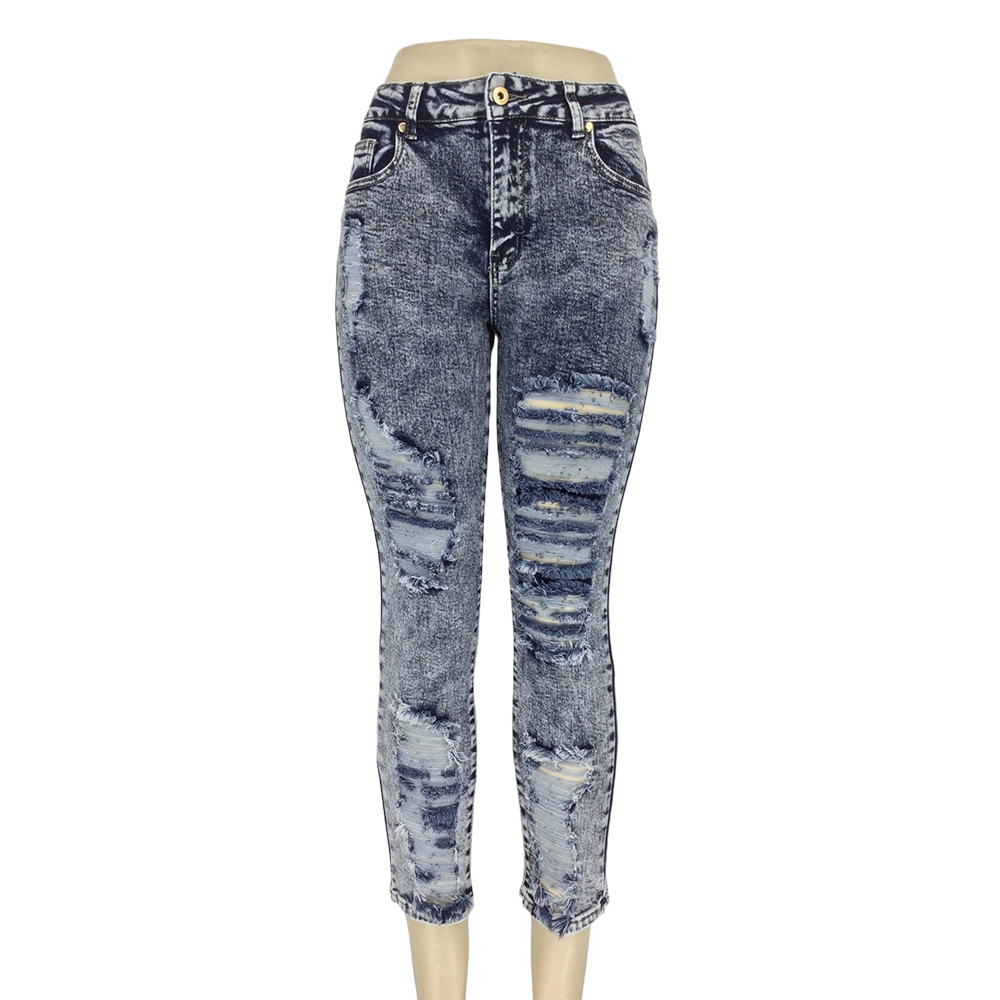
The blue-gray acid-wash appearance creates a mottled surface with contrasting light and dark areas across the denim. This treatment gives the jeans a visibly different finish from solid-color indigo denim. The wash result depends on the base fabric, dye characteristics, treatment method, and finishing parameters. For bulk orders, buyers should approve a physical wash sample and establish a reference shade before production. A controlled sample review can cover the overall color balance, contrast distribution, and consistency between the front, back, waistband, and pocket panels. Colorfastness to washing can be evaluated using ISO 105-C06, with the target performance grade agreed upon in advance. The manufacturer should also assess whether the selected finishing process affects fabric strength, seam appearance, or dimensional stability. Recording the approved wash recipe and reference sample helps reduce visible differences between production batches. This is particularly useful for wholesale denim programs that require repeat orders in the same color direction.
2. Textured Distressing
Multiple distressed sections are visible across the front legs, including horizontal openings, frayed edges, and irregular worn areas. The placement creates a varied surface pattern rather than a uniform distressed finish. For manufacturing development, buyers should specify the location, length, width, and approximate number of distressed areas on each leg. A placement tolerance of ±5 mm may be established for selected details where the design requires close alignment, subject to sample approval. The production team should inspect the surrounding fabric for unintended tearing, excessive yarn loss, and inconsistent abrasion. Where necessary, backing fabric or other reinforcement methods can be evaluated according to the approved design. Each size should be checked to confirm that the distressed details remain visually balanced after pattern grading. Buyers should also review the garment after washing to assess edge appearance and confirm that the openings have not expanded beyond the approved dimensions. Clear construction references help maintain a consistent appearance during bulk production.
3. Fitted Silhouette
The skinny-leg cut follows the shape of the hips, thighs, knees, and lower legs, creating a close-fitting outline. The finished appearance depends on pattern proportions, fabric stretch, recovery, and the relationship between individual garment measurements. Buyers should confirm waist circumference, hip circumference, front rise, back rise, thigh width, knee width, inseam length, and leg-opening measurement using an approved size chart. If stretch denim is selected, fabric extension and recovery should be evaluated before the final pattern is approved. A provisional measurement tolerance of ±1 cm may be used for selected points of measure, subject to the buyer's technical requirements. Fit samples should be reviewed in standing, sitting, and bending positions to identify excessive tension around the crotch, knees, and distressed areas. The grading rules should also be checked across representative sizes. These checks help buyers establish a consistent fit standard for their women's denim collections and reduce measurement variation during manufacturing.
4. Classic Pocket Construction
The garment uses a traditional five-pocket arrangement, with two curved front pockets, a small coin pocket, and two back patch pockets. Visible topstitching outlines the pocket openings and panel seams, connecting the details to the overall denim construction. For production specifications, buyers can confirm pocket width, pocket depth, opening shape, placement, stitch color, and distance from the waistband or side seams. A proposed placement tolerance of ±5 mm can be applied to selected pocket details where appropriate. The inspection process should check that both back pockets are aligned, the front openings have consistent shapes, and the coin pocket remains correctly positioned. Stitch density and thread selection should be established according to the fabric weight and seam requirements. Stress points around pocket corners can be reviewed for suitable reinforcement. For private-label orders, an approved pocket template and construction sample can serve as practical references for maintaining a consistent appearance across sizes and repeat production batches.
5. Customizable Denim Finish
The acid-wash surface, distressed placement, pocket proportions, thread color, and metal button are all specification points that can be discussed during product development. Subject to factory capabilities and order conditions, buyers may request adjustments to the wash intensity, distressing pattern, fabric weight, stretch percentage, hardware finish, labels, and packaging. A complete development brief should include reference images, fabric requirements, a graded size chart, finishing instructions, and the target order quantity. Before bulk manufacturing, the pre-production sample should be checked for fit, wash appearance, distressed-area placement, seam quality, and hardware attachment. Colorfastness and dimensional-change tests can be specified according to the intended market and buyer requirements. The approved sample and technical pack should be retained as production references. Wholesale buyers and private-label brands should also confirm minimum order quantities, sampling charges, lead times, and final inspection criteria with the manufacturer. This process helps align product development decisions with the buyer's merchandising and purchasing requirements.