
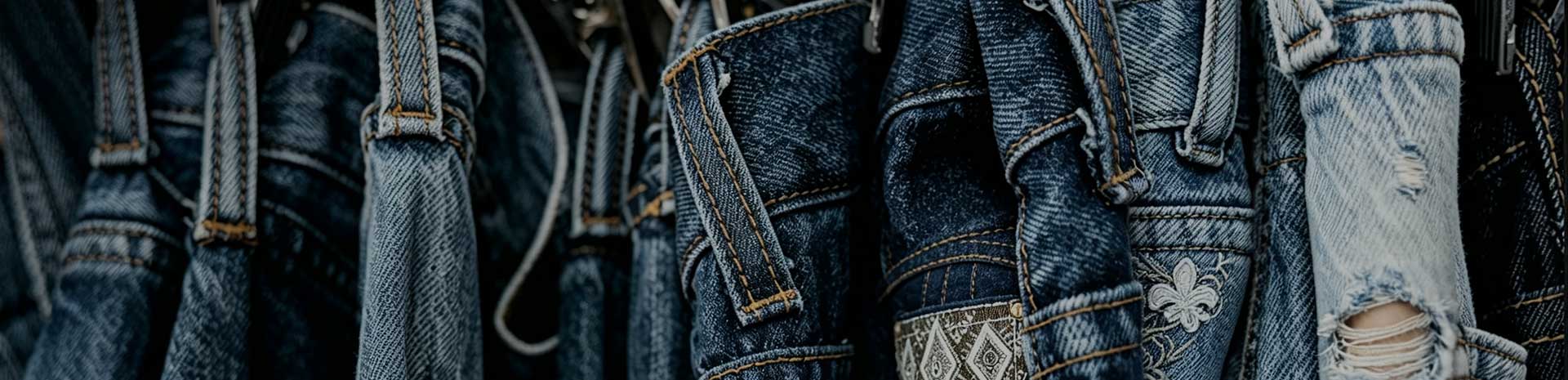
Distressed Jeans vs Clean-Finish Jeans: Which Style Appeals to More Fashion Buyers?
Clean-finish jeans generally appeal to a broader range of fashion buyers because their understated appearance fits more retail categories. Distressed jeans attract customers seeking expressive, casual, or vintage-inspired denim. For wholesale brands, the stronger choice depends on target customers, fashion positioning, finishing quality, production costs, and actual sales performance.
What Is the Main Difference Between Distressed Jeans and Clean-Finish Jeans?
The main difference between distressed jeans and clean-finish jeans is the intentional treatment of the denim surface. Distressed jeans feature visible abrasion, fraying, fading, or ripped sections, while clean-finish jeans maintain a relatively uninterrupted fabric surface without deliberate damage.
Both styles can be produced in skinny, straight-leg, bootcut, flared, and other denim silhouettes. Their differences are primarily related to garment appearance, finishing requirements, and the production controls needed to achieve the intended result.
Distressed jeans may incorporate localized abrasions, exposed yarns, frayed hems, horizontal openings, or faded areas. The degree of distressing can range from subtle surface wear to large decorative openings.
Clean-finish jeans generally emphasize a more uniform fabric appearance, although they may still undergo rinsing, softening, garment washing, or controlled color treatments.
A clean finish does not necessarily mean raw or unwashed denim.
| Comparison Factor | Distressed Jeans | Clean-Finish Jeans |
|---|---|---|
| Surface Appearance | Abrasion, fraying, fading, or openings | Relatively uninterrupted denim surface |
| Styling Direction | Casual, vintage, expressive | Classic, understated, versatile |
| Finishing Complexity | May require additional localized treatments | Depends on the selected wash |
| Fabric Strength Considerations | Distressed sections require closer evaluation | No intentional structural openings |
| Production Consistency | Placement and distressing intensity matter | Shade, sewing, and surface consistency matter |
| Common Silhouettes | Skinny, straight, wide-leg, flared | Skinny, straight, bootcut, flared |
| Customization | Distressing placement and intensity | Wash shade, stitching, trims, and fit |
| Wholesale Positioning | Fashion-focused product categories | Broad casualwear assortments |
| Main Quality Concern | Unintended tearing or inconsistent distressing | Surface defects and finishing consistency |
For clothing brands, understanding these differences is essential when evaluating the commercial role of each style.
Why Do Clean-Finish Jeans Appeal to a Broader Range of Buyers?
Clean-finish jeans can appeal to customers seeking denim without prominent ripped areas or decorative fabric damage.
Their relatively uninterrupted surface makes them adaptable to different product categories, including classic casualwear, minimalist fashion, and understated denim collections.
A dark indigo straight-leg style can be developed as a classic product, while medium-blue skinny jeans can occupy a different position within the same assortment.
Clean-finish jeans can also incorporate various waistband constructions, pocket shapes, stitching colors, and hardware finishes.
For wholesale buyers, this provides opportunities to differentiate products without relying on distressed openings.
However, a broader range of potential uses does not guarantee stronger sales.
Retail demand depends on consumer preferences, price positioning, local competition, brand identity, and available alternatives.
A retailer serving customers who prefer distressed denim may generate stronger sales from distressed styles than from clean-finish products.
For this reason, the potential appeal of clean-finish jeans should be treated as a merchandising consideration rather than a universal sales prediction.
When Are Distressed Jeans More Attractive to Fashion Buyers?
Distressed jeans can be more attractive when customers prefer visible garment treatments, casual styling, and denim with a deliberately worn appearance.
The distressed finish becomes part of the product's visual identity.
For example, a light-wash skinny jeans style with knee distressing creates a different impression from dark blue straight-leg jeans with an uninterrupted surface.
Distressed details can also be incorporated into high-waisted jeans, wide-leg trousers, flared denim, and overalls.
Their visual intensity may be adjusted to suit different brand directions.
Subtle abrasion and whiskering can create a restrained vintage appearance, while larger ripped areas produce a more expressive style.
For fashion brands, these variations make distressed denim a product-development category with several possible design directions.
The purchasing challenge is determining which level of distressing matches the intended customers.
A buyer should not assume that more ripped areas create greater retail value.
Excessive distressing may reduce suitability for certain customer groups or increase complaints about garment appearance and wear.
The approved product should reflect the brand's design direction and the customer's expectations.
How Do Manufacturing Processes Differ Between Distressed and Clean-Finish Jeans?
Both distressed and clean-finish jeans generally pass through fabric preparation, cutting, sewing, finishing, inspection, and packaging.
The main production differences arise from how the garment surface is treated.
Distressed Jeans Manufacturing
Distressed denim may require additional operations such as localized abrasion, controlled cutting, scraping, fraying, or other finishing treatments.
The selected method depends on the intended design and the manufacturer's processing capabilities.
Distressed areas should be documented through an approved sample, technical drawings, or placement references.
For each decorative opening, the production team may need to establish its location, approximate dimensions, edge appearance, and relationship to nearby seams.
The order of distressing and washing operations can affect the final result.
For example, a distressed area created before garment washing may develop a different edge appearance from one finished after washing.
Clean-Finish Jeans Manufacturing
Clean-finish denim avoids intentional rips and heavily damaged surface sections.
However, it may still require washing, softening, color adjustment, or other finishing operations.
The production team should control the approved shade, surface appearance, measurements, stitching, and overall garment quality.
Clean-finish jeans are not automatically simpler to manufacture.
A uniform dark indigo finish may require careful shade management, while a specialized clean-looking surface treatment may involve several controlled processing stages.
The manufacturing distinction is not simply that distressed jeans require more work. It is that distressed jeans introduce additional design-specific finishing variables that must be controlled.
Which Style Is Easier to Maintain Consistently in Bulk Production?
Clean-finish jeans may involve fewer decorative placement variables because they do not require individually positioned ripped or abraded sections.
However, production consistency depends on the garment specification rather than the style name alone.
For clean-finish jeans, manufacturers should inspect fabric defects, shade variation, seam alignment, pocket placement, and finished measurements.
For distressed jeans, these checks remain necessary, with additional attention to the placement, shape, and extent of distressed areas.
Two distressed garments may have slightly different frayed yarn arrangements while still matching the approved design.
This makes it important to distinguish acceptable aesthetic variation from actual manufacturing defects.
What Should a Distressing Specification Include?
A useful distressing specification should document:
Location of each distressed section.
Approximate opening length and width.
Distance from fixed garment measurement points.
Expected fraying and exposed-yarn appearance.
Areas where unintended tearing is unacceptable.
Approved washing and finishing appearance.
For example, a buyer may agree on a placement tolerance of approximately ±5 mm for selected decorative areas where accurate positioning is necessary.
This is a possible development tolerance, not a universal denim manufacturing standard.
The final requirements depend on garment size, distressing technique, fabric construction, and buyer approval.
For clean-finish jeans, the inspection specification may place greater emphasis on maintaining an acceptable surface appearance without unintended abrasions or damage.
Both styles benefit from a signed-off pre-production sample.
Do Distressed Jeans Have Lower Fabric Strength Than Clean-Finish Jeans?
Distressed jeans can have reduced strength in intentionally damaged areas because some yarns or fabric sections have been abraded, cut, or removed.
However, the overall performance difference depends on the fabric construction and the extent of distressing.
A garment with minor surface abrasion may behave differently from one containing large openings across the knees or thighs.
Clean-finish jeans do not contain the same intentional damage, but their strength still depends on fabric quality, seam construction, and finishing conditions.
A poorly constructed clean-finish garment is not necessarily stronger than a carefully manufactured distressed garment in every relevant test.
For buyers, fabric performance should be evaluated according to the intended use and agreed quality requirements.
Relevant testing may include:
| Testing Standard | Evaluation Purpose |
|---|---|
| ISO 13934-1 | Fabric tensile strength using the strip method |
| ISO 13937-2 | Fabric tear force using the trouser method |
| ISO 13935-2 | Seam maximum force using the grab method |
| ISO 5077 | Dimensional change after washing and drying |
| ISO 105-C06 | Colorfastness to laundering |
These methods should be selected according to the product and the buyer's quality specifications.
For distressed garments, testing on intact fabric alone may not fully represent the performance of areas containing large openings.
Manufacturers should also examine the finished garment and the condition of distressed sections after the agreed care procedure.
How Does Fabric Selection Affect Distressed and Clean-Finish Jeans?
Fabric selection influences the appearance and performance of both styles.
Distressed jeans require particular attention to how the fabric responds to abrasion and fraying.
The yarn structure, denim density, fiber composition, and finishing process affect the resulting distressed appearance.
A tightly constructed denim may produce different frayed edges from a softer or less dense fabric.
For clean-finish jeans, fabric selection should support the intended silhouette, surface appearance, and wearing characteristics.
Rigid denim may create a structured garment, while stretch denim can provide additional flexibility for fitted designs.
Neither fabric category is exclusive to distressed or clean-finish jeans.
For example, stretch denim can be used for either style, provided that the garment pattern and finishing processes are suitable.
When developing ripped stretch jeans, manufacturers should evaluate whether the openings interfere with fabric recovery or produce unwanted extension during movement.
Does Fabric Weight Matter?
Fabric weight influences the hand feel, structure, and response to finishing.
For certain women's denim developments, buyers may evaluate fabric weights around 10–12 oz as a starting point.
Other designs may require lighter or heavier fabrics.
These values are sourcing examples rather than fixed requirements.
The correct fabric should be selected through physical sampling and performance evaluation.
Fabric composition, weight, stretch, recovery, and washing behavior should be documented in the technical package before bulk production.
Which Finish Is More Suitable for Different Women's Jeans Silhouettes?
Both distressed and clean-finish treatments can be applied to various denim silhouettes, but their visual effects differ.
Skinny jeans with distressed knees emphasize the contrast between the fitted garment and the decorative openings.
Straight-leg jeans with light abrasion may create a relaxed vintage appearance.
Flared jeans with an uninterrupted dark wash can emphasize the leg silhouette, while distressed flared jeans can create a more expressive fashion direction.
Bootcut jeans can also use either finish.
| Jeans Silhouette | Distressed Finish | Clean Finish |
|---|---|---|
| Skinny Jeans | Knee openings, surface abrasion | Continuous fitted appearance |
| Straight-Leg Jeans | Vintage-inspired wear marks | Classic, balanced silhouette |
| Bootcut Jeans | Localized fading and abrasion | Understated denim appearance |
| Flared Jeans | Decorative tears and faded areas | Emphasis on leg proportions |
| Wide-Leg Jeans | Relaxed distressed styling | Minimalist or structured appearance |
| Denim Overalls | Utility-inspired worn effect | More uniform denim surface |
The better combination depends on the buyer's design goals and customer preferences.
A manufacturer's responsibility is to translate the intended appearance into a technically workable garment specification.
How Do Washing Processes Influence Distressed Jeans and Clean-Finish Jeans?
Washing affects the final appearance, dimensions, hand feel, and fabric condition of both styles.
For distressed jeans, washing may change frayed edges, increase the visibility of exposed yarns, or alter the size of existing openings.
For clean-finish jeans, washing can affect shade consistency, surface texture, garment measurements, and seam appearance.
The finished garment should therefore be evaluated after the intended washing process.
A design approved before washing may not have the same appearance after finishing.
At LOVEU JEANS, custom washing and garment-development discussions can incorporate these differences when reviewing reference styles and buyer requirements.
For example, a distressed jeans sample may require checks on both the overall wash shade and the appearance of individual ripped sections.
A clean-finish sample may place greater emphasis on surface uniformity and the absence of unintended abrasion.
Dimensional changes can be assessed using ISO 5077 following an agreed washing and drying procedure.
Colorfastness to domestic and commercial laundering can be evaluated using ISO 105-C06 where appropriate.
The acceptance criteria should be established before production rather than inferred from a garment's appearance.
Are Distressed Jeans More Expensive to Manufacture?
Distressed jeans can involve additional production costs when the design requires localized abrasion, cutting, fraying, reinforcement, or detailed finishing work.
However, they are not always more expensive than clean-finish jeans.
Manufacturing costs depend on the entire product specification.
A basic distressed design with limited abrasion may require fewer resources than a clean-finish garment using premium materials, complex washing, or specialized hardware.
For wholesale purchasing, the cost comparison should include fabric, cutting, sewing, washing, decorative finishing, inspection, packaging, and agreed order quantities.
Additional distressing operations can affect processing time and production yield.
For example, if a distressing operation adds an agreed processing cost per garment, the impact becomes more significant across a large order.
Buyers should request quotations based on approved reference samples rather than comparing prices for vaguely described styles.
A useful costing approach is to identify which specific finishing operations contribute to the quoted price.
This allows brands to decide whether a decorative detail creates sufficient commercial value to justify the additional production expense.
Which Style Is Better for Private Label Denim Brands?
The better style depends on how the brand differentiates its products.
Clean-finish jeans provide opportunities to emphasize fabric quality, fit, wash shade, construction, and understated design.
Distressed jeans allow brands to differentiate through abrasion placement, fading patterns, frayed openings, and vintage-inspired treatments.
Both styles can incorporate custom waistbands, embroidery, branded hardware, stitching details, and private-label packaging.
For OEM and ODM projects, buyers should provide an approved reference sample or technical package.
A clean-finish garment specification should clearly define the expected surface appearance and acceptable variation.
A distressed garment specification should document the decoration placement, finishing intensity, and acceptable condition of intentionally altered areas.
Both require accurate garment measurements and approved washing standards.
For brands planning repeat orders, maintaining the original approved sample is particularly relevant.
A distressed style that changes significantly between production batches may create problems for retailers expecting consistent product photography and appearance.
An approved design reference helps maintain recognizable styling across replenishment orders.
Which Style Creates More Risk of Customer Complaints?
Customer complaints can arise from either style, but the reasons may differ.
For distressed jeans, complaints may involve openings becoming larger than expected, loose yarns, inconsistent distressing, or differences between the delivered product and the advertised images.
For clean-finish jeans, complaints may relate to unwanted fading, visible surface defects, stitching irregularities, or color differences.
Both styles can also generate fit-related returns.
The manufacturer's quality-control process should distinguish between intended design characteristics and actual defects.
For distressed denim, an exposed yarn may be part of the approved design.
For clean-finish denim, a similar yarn irregularity may be unacceptable.
This difference should be documented in the buyer's inspection criteria.
A useful first-hand manufacturing perspective is that quality inspection cannot rely on one identical visual standard for every denim finish. The approved design determines which surface variations are acceptable.
Buyers should establish product-specific standards rather than applying the same defect classification to clean and distressed garments without considering their intended appearance.
Which Style Has Better Market Potential for Wholesale Buyers?
Clean-finish jeans may support broader assortment positioning because they can be incorporated into classic, minimalist, and everyday denim categories.
Distressed jeans may have stronger appeal within fashion-focused assortments where visible garment treatments are part of the brand identity.
However, market potential cannot be determined from finishing style alone.
A wholesaler should evaluate actual purchasing behavior within the intended customer group.
Relevant information includes previous sales, retailer feedback, reorder frequency, size-related returns, price sensitivity, and stock turnover.
For example, a distributor supplying classic casualwear retailers may prioritize clean-finish denim.
A fashion retailer specializing in vintage-inspired clothing may allocate more inventory to distressed jeans.
Neither purchasing strategy should be applied universally.
How Can Buyers Test Demand?
Brands can compare similar jeans silhouettes in both distressed and clean finishes.
Using comparable fabric, sizing, retail prices, and distribution channels helps reduce differences caused by unrelated product factors.
The buyer can then review sell-through performance, customer feedback, returns, and reorders.
The results can guide future assortment planning.
For new clothing brands, a focused trial assortment may provide a more reliable basis for larger orders than general fashion predictions.
Should Wholesale Collections Include Both Finishes?
A women's denim collection can include both distressed and clean-finish jeans when they serve different merchandising purposes.
Clean-finish jeans may form the foundation of a classic denim assortment.
Distressed jeans can introduce more expressive styles and variations in surface appearance.
For example, a collection may combine dark wash straight-leg jeans with light wash distressed skinny jeans.
Another brand may pair clean bootcut jeans with subtly distressed flared jeans.
The appropriate mix depends on brand positioning, purchasing budgets, and customer demand.
From a manufacturing perspective, some styles may share fabric sourcing, buttons, labels, or packaging when specifications permit.
However, each finish should retain its own approved washing sample, inspection criteria, and technical documentation.
Brands should avoid treating distressed and clean-finish versions as identical production products with only cosmetic differences.
Their finishing processes and acceptance requirements may require separate validation.
What Should Buyers Check Before Placing a Bulk Denim Order?
Buyers should assess the finished product against an approved sample and written technical specification.
For distressed jeans, the review should include the position and extent of intentional damage, wash appearance, seam condition, and garment measurements.
For clean-finish jeans, the review should emphasize fabric surface quality, shade consistency, stitching, fit, and finishing.
The garment specification should identify the approved fabric composition, weight, stretch characteristics, size grading, washing treatment, hardware, labels, and packaging.
Inspection methods and acceptance criteria should be agreed upon before bulk production.
When ordering distressed jeans, buyers should also clarify the acceptable variation in frayed edges and irregular openings.
These details are difficult to control through product names or photographs alone.
For clean-finish jeans, the buyer should define which natural fabric characteristics are acceptable and which surface defects require rejection.
A clear technical package reduces ambiguity between the design team, manufacturer, and purchasing department.
It also provides a reference for future production batches.
Distressed Jeans vs Clean-Finish Jeans: Which Appeals to More Fashion Buyers?
Clean-finish jeans generally have broader merchandising flexibility because they suit multiple denim categories and customers seeking an uninterrupted fabric appearance.
Distressed jeans can be more attractive to buyers seeking vintage-inspired styling, visible fading, and expressive product details.
Neither finish guarantees stronger demand or higher profitability.
Wholesale buyers should compare actual customer preferences, manufacturing requirements, production costs, and quality-control considerations.
For brands developing classic denim ranges, clean-finish jeans may be a practical starting point.
For brands emphasizing distinctive fashion styling, distressed denim may provide stronger product differentiation.
A balanced assortment can include both finishes when each serves a clear commercial purpose.
The best purchasing decision is based on approved product samples and verified sales evidence rather than assuming that one finishing style will appeal to every market.
Develop Distressed and Clean-Finish Jeans with LOVEU JEANS
LOVEU JEANS works with denim product categories, including women's skinny jeans, straight-leg jeans, bootcut jeans, flared jeans, and denim styles with different decorative and washing treatments.
For clothing brands, wholesalers, importers, and distributors, our team can discuss clean-finish and distressed denim requirements based on reference samples, fabric specifications, size charts, and finishing preferences.
Custom development discussions may cover wash shade, distressing placement, embroidery, pocket details, hardware, labels, and packaging.
Before bulk production, the intended appearance, garment measurements, and quality requirements should be confirmed through an approved sample and technical documentation.
Whether your collection focuses on classic denim or more expressive distressed styles, clear product specifications support coordinated sourcing and manufacturing.
Contact LOVEU JEANS to discuss your women's denim collection, request a wholesale quotation, and share your custom washing and OEM/ODM production requirements.