
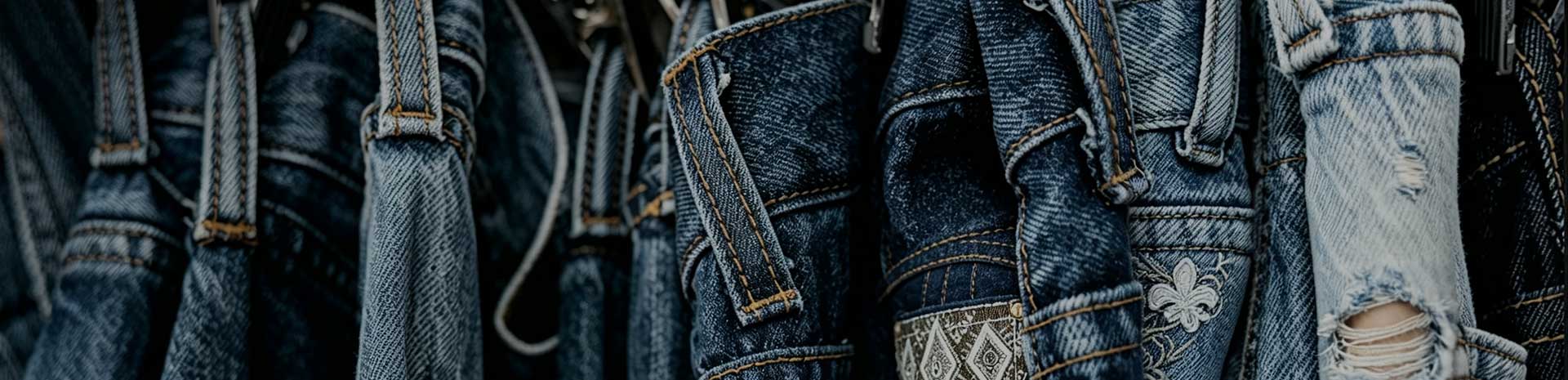
Capri Jeans vs Full-Length Jeans: Which Length Suits Different Retail Markets?
Full-length jeans generally suit a wider range of retail markets because they support year-round assortments and multiple leg silhouettes. Capri jeans are better suited to collections emphasizing cropped styling, warmer-weather clothing, and seasonal variety. Wholesale buyers should choose based on customer preferences, climate, sizing requirements, inventory turnover, and market-specific sales data.
What Is the Difference Between Capri Jeans and Full-Length Jeans?
The primary difference between Capri jeans and full-length jeans is where the trouser legs end on the wearer's body. Capri jeans generally finish between the knee and ankle, commonly around the mid-calf or lower calf, while full-length jeans extend toward the ankle or below.
Both products belong to the women's denim trousers category, but their different lengths influence garment proportions, pattern development, fabric consumption, and retail positioning.
Capri jeans are sometimes confused with ankle-length or cropped jeans. However, these terms should not be treated as identical.
Capri jeans typically expose a noticeable section of the lower leg, while ankle-length jeans finish closer to the ankle. Cropped jeans represent a broader category that can include several shortened lengths.
Full-length jeans may finish at the ankle, cover part of the footwear, or extend farther depending on the intended silhouette.
For clothing manufacturers and wholesale buyers, these differences should be defined through finished inseam measurements rather than product names alone.
| Comparison Factor | Capri Jeans | Full-Length Jeans |
|---|---|---|
| Garment Length | Generally mid-calf to lower calf | Extends toward the ankle or below |
| Main Appearance | Cropped lower-leg silhouette | Complete trouser-length silhouette |
| Common Leg Styles | Slim, fitted, straight | Skinny, straight, bootcut, flared, wide-leg |
| Seasonal Positioning | Often used in warmer-weather collections | Suitable for multiple seasonal assortments |
| Fabric Consumption | Generally lower for comparable patterns | Generally higher for comparable patterns |
| Pattern Development | Requires precise cropped-leg proportions | Requires accurate full-length proportions |
| Main Fit Consideration | Hem position relative to calf | Inseam and hem position relative to footwear |
| Wholesale Positioning | Seasonal and specialized categories | Broad denim assortments |
| Inventory Planning | May require more seasonal demand assessment | Can support continuing product programs |
| Customization | Hem length, leg width, wash, pockets | Inseam, silhouette, wash, pockets |
Neither garment length guarantees higher sales. Its commercial suitability depends on the intended customers and the retail environment.
Why Do Full-Length Jeans Suit a Broader Range of Retail Markets?
Full-length jeans can support a wide variety of women's denim styles, making them a practical foundation for wholesale collections.
Their length can be adapted to skinny, straight-leg, bootcut, flared, and wide-leg silhouettes without changing the basic product category.
This gives clothing brands flexibility when building assortments around different fashion preferences.
For example, a retailer may carry dark indigo full-length skinny jeans alongside medium-wash straight-leg jeans and light-wash flared styles.
Although these products share a full-length construction, they address different fit preferences and merchandising directions.
Full-length jeans can also be developed using rigid denim, stretch denim, and different fabric weights.
Their retail applications are not limited to one season or climate, although fabric thickness and styling still affect seasonal suitability.
For wholesalers, the advantage lies in having more silhouette and fabric combinations available within one length category.
However, broader versatility does not automatically mean that every full-length design will sell well.
A poorly fitted full-length style may perform worse than a well-targeted Capri design in a particular market.
Buyers should therefore evaluate garment fit, customer preferences, and historical sales performance before allocating inventory.
When Are Capri Jeans a Better Choice for Retailers?
Capri jeans are particularly relevant to retailers developing cropped denim collections or clothing ranges associated with warmer-weather styling.
Their shorter leg length creates a different visual proportion from conventional full-length jeans.
This can provide additional variety for brands whose main denim assortment already includes several full-length styles.
A high-waisted Capri jeans design, for example, may feature a fitted lower leg and a hem positioned below the knee.
Another version may use a straighter leg, medium-blue washing, and decorative back pockets.
These differences allow manufacturers to develop multiple Capri products without relying entirely on changes in fabric color.
For fashion retailers, Capri jeans may also suit customers who specifically prefer shorter trousers.
However, Capri jeans should not be selected only because a market has a warm climate.
Consumers in warmer regions may still prefer full-length jeans for styling, workplace expectations, or personal comfort.
Retailers should evaluate customer demand through actual sales data, purchasing inquiries, and comparable product performance.
Capri jeans are most commercially relevant when their shortened length supports a clearly identified customer preference.
How Should Capri Jeans Be Distinguished from Cropped and Ankle-Length Jeans?
The distinction between Capri, cropped, and ankle-length jeans is important for international wholesale communication.
These product names are sometimes used inconsistently across fashion brands and retail markets.
Capri jeans generally end around the calf, leaving the ankle exposed.
Ankle-length jeans finish closer to the ankle and may expose only a small section of the lower leg.
Cropped jeans describe a wider category of shortened trousers and do not always identify one specific hem position.
A buyer requesting cropped jeans may therefore expect a different finished length from a supplier interpreting the same request as Capri jeans.
For manufacturers, the most reliable solution is to confirm the finished inseam and intended hem position.
The technical package should identify the reference garment size, measuring method, and size grading requirements.
A physical sample is particularly useful because the same inseam length can produce different visual results on customers with different leg proportions.
In wholesale denim manufacturing, garment length should be confirmed through measurements and fit samples rather than depending entirely on terms such as Capri, cropped, or ankle-length.
This distinction helps reduce misunderstandings during sample approval and bulk production.
How Do Inseam Measurements Differ Between Capri and Full-Length Jeans?
Inseam length is one of the most important measurements when comparing Capri jeans and full-length jeans.
The inseam is generally measured from the crotch seam intersection to the lower hem along the inside leg.
Capri jeans have a shorter inseam because the hem finishes higher on the leg.
Full-length jeans require a longer inseam appropriate to the selected garment size and silhouette.
Capri Jeans Inseam Development
For illustrative product development, some women's Capri jeans may use inseams around 45–60 cm, depending on the intended calf position and sample size.
This is a broad example rather than a universal industry definition.
A shorter Capri style may finish closer to the knee, while another version may extend toward the lower calf.
The position should be confirmed on a fit model representing the intended customer group.
Full-Length Jeans Inseam Development
Full-length women's jeans may use inseams around 71–86 cm or other lengths according to the style, size range, and intended fit.
For example, a full-length skinny jeans pattern may require a different finished length from bootcut jeans intended to extend farther over footwear.
These measurements are development references, not fixed manufacturing standards.
The buyer should confirm actual inseam lengths for every size or length option.
Other measurements should include waist circumference, hip circumference, front rise, back rise, thigh width, knee width, and leg opening.
For both styles, finished measurements should be verified after the selected washing process.
Why Is Hem Placement More Critical for Capri Jeans?
Hem placement has a strong influence on the appearance of Capri jeans because the lower edge finishes around the calf rather than near the ankle.
A small change in length can alter the intended visual proportion.
For example, a Capri hem positioned near the widest part of the calf may create a different silhouette from one finishing several centimeters lower.
The effect also depends on the leg opening.
A fitted Capri hem follows the shape of the calf more closely, while a wider hem creates additional space around the lower leg.
For manufacturing development, the buyer should specify both the finished inseam and the leg opening.
These two measurements should be evaluated together.
A shorter inseam without an appropriate adjustment to the lower-leg width may produce an unintended fit.
This is particularly relevant when developing Capri jeans from an existing full-length skinny or straight-leg pattern.
Simply shortening the trouser legs may not produce the desired Capri silhouette.
The pattern may require changes to the taper, calf width, and hem construction.
A finished garment sample should therefore be reviewed before size grading and bulk production.
Which Length Is Better for Skinny, Straight-Leg, and Flared Jeans?
Different jeans silhouettes respond differently to Capri and full-length construction.
Skinny jeans can be developed in either length because the leg follows a relatively narrow profile.
A Capri skinny style creates a fitted appearance through the calf, while a full-length version continues toward the ankle.
Straight-leg jeans can also use both lengths.
However, a shortened straight-leg pattern should be reviewed to confirm that the leg opening remains balanced with the garment's overall proportions.
Bootcut and flared jeans generally depend more heavily on their lower-leg length because the widening below the knee defines the silhouette.
Shortening these garments can substantially change their appearance.
| Jeans Silhouette | Capri Length | Full Length |
|---|---|---|
| Skinny Jeans | Fitted cropped appearance | Continuous fitted silhouette |
| Straight-Leg Jeans | Shortened straight profile | Classic full-length proportions |
| Slim Jeans | Defined calf-length silhouette | Narrow full-length appearance |
| Bootcut Jeans | Requires careful flare adjustment | Conventional bootcut proportions |
| Flared Jeans | Creates a cropped flare variation | More pronounced full flare |
| Wide-Leg Jeans | Cropped wide-leg styling | Extended wide-leg silhouette |
For wholesale buyers, the best length should be selected according to the intended design rather than assuming every full-length jeans pattern can be shortened without modification.
What Fabric Is Suitable for Capri Jeans?
Capri jeans can be manufactured using rigid or stretch denim, depending on the intended fit.
For fitted Capri styles, stretch denim may provide additional flexibility around the thighs, knees, and calves.
This can be particularly relevant when the hem finishes near a wider part of the calf.
However, fabric stretch should not replace accurate pattern development.
A garment with insufficient calf allowance may remain uncomfortable even when the fabric contains elastane.
For straighter Capri styles, cotton denim with limited stretch or rigid construction may be appropriate.
Fabric weight should also reflect the desired garment appearance and wearing characteristics.
For example, some women's casual denim developments may evaluate fabric weights around 9–11 oz as an initial sampling range.
Other products may require heavier materials.
These figures represent possible sourcing options rather than fixed requirements for Capri jeans.
Buyers should evaluate fabric composition, weight, stretch recovery, dimensional stability, and finished garment fit.
For wholesale production, fabric selection should be confirmed using the actual Capri pattern and intended washing process.
What Fabric Is Better for Full-Length Jeans?
Full-length jeans can accommodate a broad range of denim fabrics because the category includes multiple leg silhouettes.
Rigid denim may be suitable for structured straight-leg and wide-leg styles.
Stretch denim may be preferred for certain fitted skinny or slim-leg designs.
Bootcut and flared jeans can use either fabric category, depending on the desired structure and drape.
Fabric weight influences garment appearance, but there is no single weight suitable for every full-length style.
For some women's denim developments, 10–13 oz fabric may provide a starting point for material evaluation.
Heavier or lighter fabrics may be selected according to the buyer's requirements.
The more important issue is whether the fabric performs appropriately in the finished garment.
Full-length jeans require attention to leg twisting, shrinkage, seam alignment, and hem consistency.
For stretch denim, recovery performance is also relevant.
A fabric that extends during wear but does not recover adequately may affect the intended leg silhouette.
The selected material should be evaluated after washing and fitting before bulk production is approved.
Does Capri Jeans Manufacturing Require Less Fabric?
Capri jeans generally require less fabric than comparable full-length jeans because their leg panels are shorter.
However, the exact saving depends on the garment pattern, denim width, size distribution, fabric shrinkage, and cutting layout.
Fabric consumption should be calculated using actual graded patterns and cutting markers.
For example, if an approved marker shows a difference of 0.15 meter per garment between comparable Capri and full-length styles, an order of 4,000 pieces would represent approximately 600 meters of fabric difference.
This calculation illustrates material planning rather than a fixed industry consumption rate.
The actual amount may be higher or lower.
Shorter leg panels do not always produce proportional cost savings because other garment components remain largely unchanged.
The waistband, pockets, fly, belt loops, and many sewing operations may be similar.
Manufacturing costs also depend on washing, finishing, decorative details, labor, and packaging.
For wholesale buyers, lower fabric consumption should be evaluated alongside the complete production quotation.
A Capri style with complex embroidery or specialized washing may cost more than a basic full-length jeans design.
Which Length Is Better for Warm-Weather Retail Markets?
Capri jeans may be suitable for warm-weather assortments because their shorter length leaves part of the lower leg uncovered.
This can support a seasonal product direction for retailers emphasizing cropped clothing.
However, length alone does not determine thermal comfort.
Fabric weight, fiber composition, air permeability, fit, and garment construction also influence how denim feels in warmer conditions.
A lightweight full-length jeans style may be preferable to a tightly fitted Capri style for some customers.
Retailers should therefore avoid treating Capri jeans as the automatic best choice for every warm-weather market.
For buyers serving destinations such as Miami or other regions with long warm seasons, cropped denim may be worth evaluating as part of the assortment.
However, demand must be confirmed through customer preferences and sales records.
For a wholesale distributor, the more practical question is whether customers actively purchase calf-length jeans rather than simply whether the local climate is warm.
A product should be selected because it matches actual retail demand.
Are Full-Length Jeans Better for Year-Round Sales?
Full-length jeans can support year-round retail assortments because they are available in different fabric weights, fits, washes, and styling directions.
They are not limited to a particular warm-weather or cold-weather category.
For example, a retailer may carry lighter full-length denim for one season and heavier denim for another.
Dark wash straight-leg jeans can occupy a different merchandising position from light wash flared jeans, even though both have full-length construction.
This flexibility allows wholesalers to maintain several product categories within the same general length group.
However, year-round suitability does not guarantee stable sales.
Retail demand can change according to fashion preferences, inventory levels, pricing, and competing products.
For wholesalers, full-length jeans may be useful for repeat-order programs when the selected designs have demonstrated consistent customer demand.
Actual sales history remains the strongest basis for determining whether a style should be maintained throughout the year.
How Do Capri and Full-Length Jeans Perform in Different Retail Channels?
Retail channel positioning can influence which length is more appropriate.
A fashion boutique focused on seasonal styling may select Capri jeans to add variety to its product range.
A general clothing retailer serving a wider customer base may prioritize full-length jeans in several fits and washes.
A private-label brand can develop both lengths when they support separate customer preferences.
| Retail Channel | Potential Product Direction | Purchasing Consideration |
|---|---|---|
| Women's Fashion Boutiques | Capri and full-length styles | Collection identity and styling |
| General Casualwear Retailers | Full-length jeans | Broad silhouette selection |
| Seasonal Apparel Collections | Capri jeans | Seasonal demand and inventory timing |
| Classic Denim Retailers | Full-length jeans | Fit consistency and replenishment |
| Private Label Fashion Brands | Both lengths | Differentiation and customer preferences |
| Wholesale Distributors | Market-specific assortment | Sales records and reorder demand |
| Online Fashion Retailers | Both lengths | Accurate measurements and product descriptions |
These are merchandising considerations, not verified rankings of sales performance.
Different retailers within the same country may have very different purchasing requirements.
For international buyers, customer data is more useful than assigning one denim length to an entire geographic market.
How Does Garment Length Affect Size Grading?
Size grading determines how garment measurements change across different sizes.
For Capri jeans, grading must maintain the intended relationship between the knee, calf, and hem position.
For full-length jeans, grading must preserve the intended leg proportions and finished length.
A common manufacturing mistake is to assume that increasing waist and hip measurements automatically creates an appropriate larger size.
Leg measurements and garment length may require separate grading rules.
For example, the increase in calf circumference between two sizes may not be identical to the increase in thigh circumference.
This matters particularly for fitted Capri jeans.
For full-length jeans, leg opening and inseam requirements also depend on the silhouette.
Brands selling multiple inseam options may need separate length specifications within the same waist size.
What Measurements Should Be Included?
The approved technical specification should identify:
Waist and hip circumference.
Front and back rise.
Thigh and knee width.
Calf width where relevant.
Finished inseam.
Leg opening.
Hem construction.
Measurement tolerances.
A provisional tolerance of ±1 cm may be discussed for selected garment measurement points, depending on the buyer's requirements.
This is an example of a negotiable production tolerance rather than a universal standard.
The final measurement method and acceptance limits should be confirmed before manufacturing.
Why Is Length Accuracy Important for Online Denim Retailers?
Length accuracy is particularly relevant to online retailers because customers cannot physically try on the product before ordering.
A product described as Capri jeans may appear different from customer expectations if its hem finishes closer to the ankle.
Similarly, full-length jeans may appear too short or too long depending on the intended inseam.
Product photographs alone may not communicate exact garment dimensions.
For online retail, the product specification should clearly identify the inseam, fit, rise, and leg opening.
Retailers may also provide the model's height and worn size to give additional context.
However, model photography should not replace the garment measurement chart.
For wholesale buyers supplying e-commerce brands, consistent production measurements help reduce differences between product listings and delivered garments.
Fit-related returns cannot be eliminated through measurement charts alone, but clear information can help customers make more informed purchasing decisions.
A manufacturer should therefore treat length accuracy as both a production issue and a product-information requirement.
Do Washing Processes Affect Capri and Full-Length Jeans Differently?
Washing can change the dimensions and appearance of both Capri and full-length jeans.
The resulting effects depend on fabric construction, garment pattern, and finishing conditions.
For Capri jeans, dimensional changes can influence the hem's final position on the calf.
A small length difference may become visually noticeable because the garment is intended to finish at a specific lower-leg point.
For full-length jeans, shrinkage can affect ankle coverage, footwear interaction, and the intended leg break.
This is especially relevant for bootcut or flared styles with longer inseams.
Manufacturers should approve the finished garment after the intended washing process.
Dimensional changes can be evaluated using ISO 5077 following an agreed washing and drying procedure.
Colorfastness to laundering can be assessed under ISO 105-C06 where appropriate.
The buyer and manufacturer should establish the required methods and acceptance criteria.
At LOVEU JEANS, garment length and washing requirements can be considered together during custom denim development discussions.
A sample that meets the intended inseam before washing should not automatically be accepted as the final production reference.
The finished measurements are the relevant specifications for commercial orders.
Which Style Is Easier to Manage in Wholesale Inventory?
Full-length jeans may be easier to incorporate into continuing inventory programs when they match established customer demand.
Capri jeans may require more deliberate seasonal planning for retailers whose customers purchase cropped denim mainly during particular periods.
However, inventory performance cannot be determined by garment length alone.
A successful Capri style may generate reliable repeat orders, while an unsuitable full-length design may remain unsold.
Wholesale buyers should evaluate sell-through rates, reorder frequency, size distribution, customer returns, and inventory turnover.
For Capri jeans, retailers may need to consider when their seasonal assortment will be introduced and when replenishment becomes less commercially attractive.
For full-length jeans, buyers may maintain a broader selection of washes and fits if customer demand supports it.
A useful assortment strategy is to distinguish between continuing products and shorter-term seasonal styles.
These categories should be based on actual sales performance rather than assumptions about which length is more popular.
Can Capri and Full-Length Jeans Be Manufactured from the Same Denim Fabric?
Yes. Both styles can sometimes be produced using the same denim fabric, provided the material is suitable for their individual patterns and intended finishes.
For example, a brand may develop medium-blue stretch denim in both a fitted Capri design and a full-length skinny jeans style.
Shared fabric sourcing may simplify material purchasing and help maintain consistency across the collection.
However, the shorter garment may require adjustments to the calf width and hem opening.
The same base fabric does not guarantee that both styles will fit correctly.
For full-length jeans, stretch and recovery must be evaluated along the complete leg.
For fitted Capri jeans, the behavior of the fabric around the calf and hem may require additional attention.
If both products undergo the same washing process, finished measurements should still be confirmed separately.
Manufacturers should approve each garment pattern and sample before bulk production.
Coordinating fabric sourcing can be useful, but pattern development and garment inspection remain style-specific.
What Are the Main Quality-Control Differences?
The quality-control requirements of Capri and full-length jeans share many common elements.
Both require inspection of fabric, sewing, pocket construction, hardware, washing, and garment measurements.
The differences primarily involve length-specific proportions.
For Capri jeans, inspection should emphasize the hem position, calf width, leg opening, and balance between the left and right legs.
For full-length jeans, the focus should include inseam consistency, hem width, side seam alignment, and overall leg proportions.
| Inspection Item | Capri Jeans | Full-Length Jeans |
|---|---|---|
| Waist and Hip Measurements | Required | Required |
| Rise Measurements | Required | Required |
| Thigh and Knee Measurements | Required | Required |
| Calf Width | Particularly relevant | Depends on silhouette |
| Inseam | Determines cropped position | Determines full-length fit |
| Leg Opening | Influences calf appearance | Influences ankle and footwear fit |
| Hem Symmetry | Required | Required |
| Post-Wash Measurements | Required | Required |
| Stitching and Hardware | Required | Required |
A useful manufacturing distinction is that Capri jeans require precise control of where the garment ends on the calf, while full-length jeans require control of how the leg finishes around the ankle and footwear.
This difference should be reflected in fitting samples and production measurement charts.
Which Length Is Better for Private Label Denim Brands?
The better choice depends on the brand's product identity and intended customers.
Full-length jeans provide more opportunities to develop classic denim silhouettes across different fits and washes.
Capri jeans can add a recognizable cropped product category and create seasonal variety.
For private-label development, both products can be customized through fabric selection, waistband construction, pocket design, washing, decorative stitching, and branded components.
Capri jeans may require specific attention to hem placement, calf measurements, and leg proportions.
Full-length jeans may require different inseam options or silhouette-specific leg measurements.
A buyer should provide a reference garment, technical drawing, or finished measurement chart.
LOVEU JEANS can discuss Capri and full-length denim requirements according to the buyer's target market, preferred fabric, sizing specifications, and customization needs.
Our team can review the requested leg shape, washing finish, pocket details, and private-label requirements before confirming sample-development arrangements.
For brands producing both lengths, separate approved patterns and finished samples help maintain consistency.
Should New Wholesale Buyers Start with Capri Jeans or Full-Length Jeans?
New wholesale buyers may consider full-length jeans as an initial product category because they support a wider selection of conventional denim silhouettes.
However, Capri jeans may be the more appropriate starting point when the buyer already serves customers seeking cropped denim.
The decision should begin with the intended retail customer rather than a general assumption about the popularity of either length.
A buyer can evaluate comparable retail products, customer inquiries, preferred fits, and expected selling prices.
Physical samples should then be reviewed for fabric appearance, size accuracy, comfort, and finishing quality.
For Capri jeans, the sample should confirm the intended calf-length position.
For full-length jeans, the review should establish the required inseam and relationship between the hem and footwear.
Initial purchasing quantities should reflect expected demand and inventory capacity.
After the first sales period, the buyer can compare sell-through performance, returns, customer feedback, and reorder requests.
These results provide a practical basis for deciding whether to expand Capri or full-length jeans within the next collection.
How Can Retailers Build a Collection with Both Lengths?
A balanced denim collection can include both Capri and full-length jeans when each style has a distinct merchandising purpose.
Full-length jeans may form the main assortment, while Capri jeans provide cropped alternatives.
For example, a retailer may carry dark-wash full-length straight-leg jeans, medium-blue full-length bootcut jeans, and light-wash fitted Capri jeans.
Another brand may use the same denim wash across both lengths to create a coordinated product range.
The appropriate combination depends on customer preferences and the retailer's product strategy.
From a manufacturing perspective, brands may coordinate fabric sourcing, buttons, labels, and packaging when the specifications permit.
However, each garment should retain its own pattern, measurement chart, and approved fit sample.
A Capri version should not be developed by shortening a full-length garment without reviewing the hem width and lower-leg proportions.
For wholesalers, product differentiation should be based on the intended fit and customer preference rather than simply introducing another length variation.
Capri Jeans vs Full-Length Jeans: Which Length Suits Different Retail Markets?
Full-length jeans are generally more adaptable to broad wholesale assortments because they can be developed in several leg silhouettes and fabric constructions.
Capri jeans are useful for retailers seeking cropped denim styles, seasonal variety, or products targeting customers who prefer shorter trousers.
The better choice depends on customer demand, climate-related merchandising, garment measurements, fabric selection, production costs, and sales history.
For manufacturers, the main technical difference is the relationship between inseam length, lower-leg width, and finished hem position.
Capri jeans require particular attention to calf proportions, while full-length jeans require accurate ankle-level or extended-leg measurements.
Neither length guarantees higher sales or lower manufacturing costs.
Wholesale buyers should evaluate approved samples and actual purchasing evidence before deciding which category deserves greater inventory allocation.
A strong denim assortment is built around products that match the intended customers, maintain consistent measurements, and support the retailer's commercial objectives.
Develop Capri and Full-Length Jeans with LOVEU JEANS
LOVEU JEANS focuses on denim apparel development for clothing brands, wholesalers, importers, and distributors seeking different women's jeans silhouettes and product specifications.
Our team can discuss Capri jeans and full-length denim styles according to your reference samples, preferred fabrics, garment measurements, washing requirements, and branding details.
Custom development discussions may include high-waisted Capri jeans, skinny jeans, straight-leg jeans, bootcut jeans, flared jeans, embroidered pockets, and decorative finishes.
For wholesale projects, buyers can provide their preferred inseam lengths, leg openings, size charts, denim weights, and target wash shades.
Clear specifications help establish the requirements for sampling, quotation, production planning, and quality inspection.
Contact LOVEU JEANS to discuss Capri or full-length women's jeans, request a wholesale quotation, and share your OEM/ODM requirements for your next denim collection.